

Posted on August 28 2026
Top 10 Countries for Biomedical Engineers to Work Abroad: Salary, Demand & PR Opportunities Compared

By , Editor & Director
Updated September 11 2026
The top 10 countries for Biomedical Engineers to work abroad are the USA, Germany, Canada, Australia, the UK, Switzerland, Ireland, the Netherlands, the UAE, and Sweden. These countries offer competitive salaries, biomedical engineering jobs, established medical device industries, work visa options, and permanent residence pathways.
The global bioengineering market is projected to reach nearly USD 1.49 trillion by 2035, driven by rising demand for medical devices, diagnostic equipment, biomaterials, implants, prosthetics, wearable health devices, medical robotics, and biotechnology. This growth is increasing demand for Biomedical Engineers in medical device companies, hospitals, biotechnology and pharmaceutical companies, research laboratories, and healthcare technology firms, with opportunities across medical equipment, clinical engineering, medical devices, and biomedical research.
*Want to work abroad? Sign up with Y-Axis Resume Marketing Services to find right job faster.
Why Demand for Biomedical Engineers Is Increasing Globally?
Demand for Biomedical Engineers is rising with growing needs for medical devices, diagnostics, implants, patient monitoring, and rehabilitation technology. Ageing populations, chronic diseases, and advances in AI, robotics, imaging, wearables, and biotechnology are creating more opportunities worldwide.
- Medical Devices: Demand for diagnostic equipment, implants, prosthetics, and monitoring devices.
- Ageing Population: Greater need for mobility, rehabilitation, and monitoring technologies.
- Chronic Diseases: More diagnostic, treatment, and monitoring solutions.
- AI and Robotics: Growth in AI-assisted diagnostics and surgical robotics.
- Wearable Technology: Expansion of health tracking and remote monitoring devices.
- Biotechnology: Growth in biomaterials, tissue engineering, and regenerative medicine.
How to Choose the Right Country for Biomedical Engineering Jobs Abroad?
The right country depends on salary, job demand, medical technology industries, qualifications, work visa requirements, and permanent residence options. Biomedical Engineers should also consider the type of role they want, such as medical device engineering, clinical engineering, biomedical research, or healthcare technology.
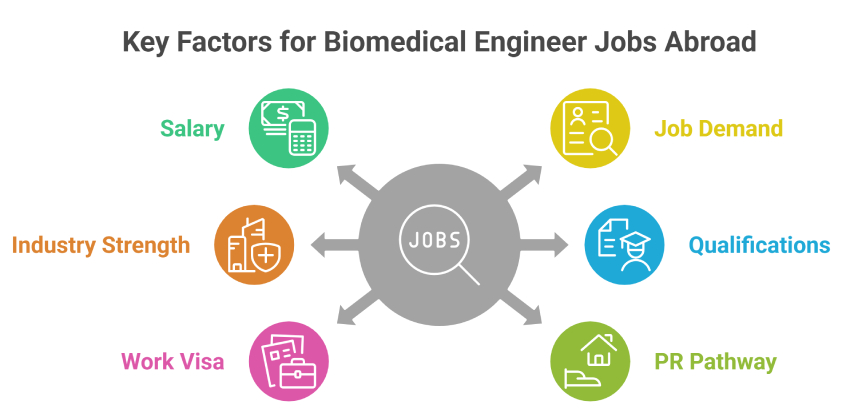
- Salary: Compare average salaries with living costs and taxes.
- Job Demand: Check biomedical engineering vacancies and long-term job growth.
- Industry Strength: Look for strong medical device, biotechnology, pharmaceutical, and healthcare sectors.
- Qualifications: Check degree recognition, licensing, registration, and employer requirements.
- Work Visa: Compare skilled-worker and employer-sponsored visa options.
- PR Pathway: Check whether biomedical engineering roles can qualify for permanent residence.
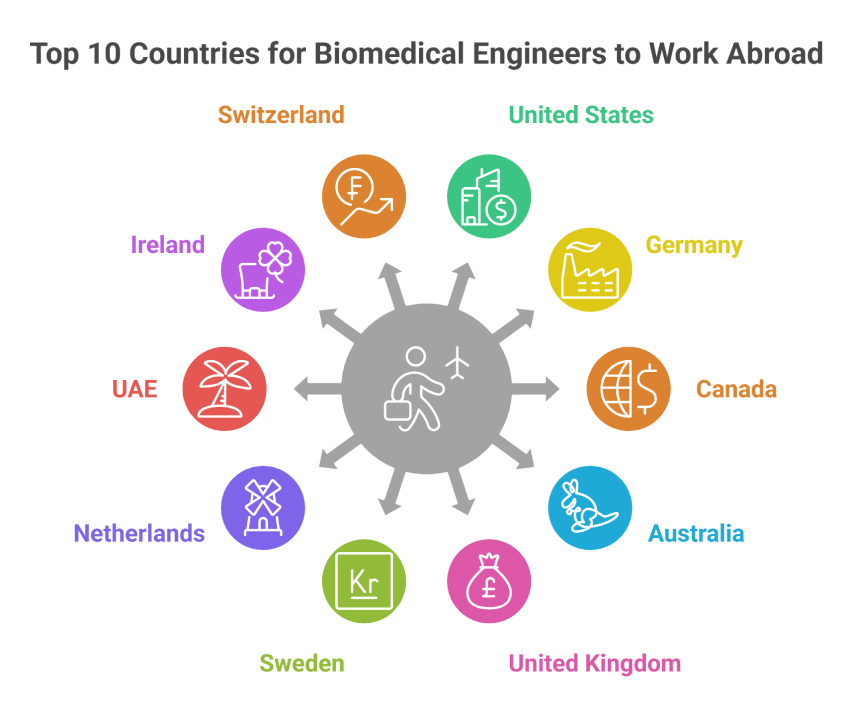
Top 10 Countries for Biomedical Engineers to Work Abroad
The USA, Germany, Canada, Australia, and Switzerland are among the leading destinations for Biomedical Engineers, supported by established medical device, healthcare, biotechnology, and research industries. Ireland and the Netherlands also have strong medical technology and life sciences sectors. The global medical devices market is projected to reach around USD 1.2 trillion by 2035, supported by continued development in diagnostics, implants, monitoring equipment, surgical technologies, and digital healthcare. Biomedical Engineers can earn more than AED 200,000 and find strong job demand, work visa options, and permanent residence pathways across many destinations.
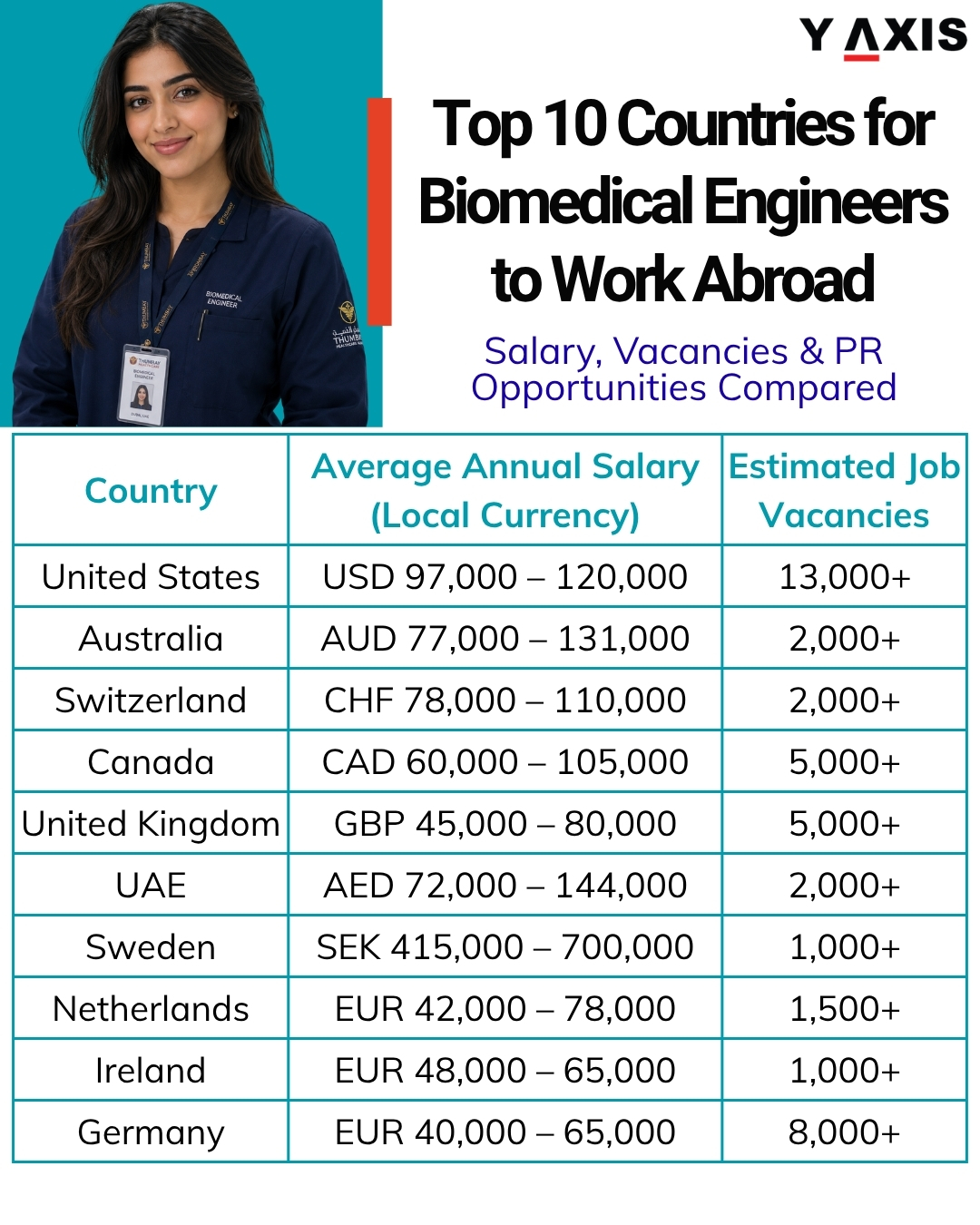
| Country | Average Annual Salary (Local Currency) | Estimated Biomedical Engineer Job Vacancies |
|---|---|---|
| United States | USD 97,000 – 120,000 | 13,000+ |
| Germany | EUR 40,000 – 65,000 | 8,000+ |
| Canada | CAD 60,000 – 105,000 | 5,000+ |
| Australia | AUD 77,000 – 131,000 | 2,000+ |
| United Kingdom | GBP 45,000 – 80,000 | 5,000+ |
| Sweden | SEK 415,000 – 700,000 | 1,000+ |
| Netherlands | EUR 42,000 – 78,000 | 1,500+ |
| UAE | AED 72,000 – 144,000 | 2,000+ |
| Ireland | EUR 48,000 – 65,000 | 1,000+ |
| Switzerland | CHF 78,000 – 110,000 | 2,000+ |
*Want to work abroad? Sign up with Y-Axis Resume Marketing Services to find right job faster.
Best Countries for Biomedical Engineers to Work and Settle Abroad
Canada, Australia, Germany, the UK, Ireland, and the USA are strong destinations for Biomedical Engineers looking to build an international career and settle abroad. These countries offer biomedical engineering jobs, competitive salaries, established MedTech industries, skilled-worker visa routes, and permanent residence options.
Demand is growing across medical devices, clinical engineering, medical imaging, prosthetics, biotechnology, research, and healthcare technology, creating opportunities for Biomedical Engineers to develop their careers and pursue long-term settlement.
Biomedical Engineer Jobs in the United States
The United States is a major market for Biomedical Engineers, with jobs in medical device design, clinical engineering, medical imaging, biomaterials, rehabilitation technology, robotics, and biomedical R&D. Employment for Bioengineers and Biomedical Engineers is projected to grow 5% by 2034, driven by demand for biomedical devices, procedures and healthcare technologies. A bachelor’s degree in biomedical engineering, bioengineering or a related engineering field is the standard entry qualification, while some research positions require graduate study. Biomedical Engineers can use the H-1B specialty-occupation route through a U.S. employer. EB-2 and EB-3 provide employment-based Green Card routes, supporting long-term careers in medical technology and healthcare.
| Factor | Details |
|---|---|
| Biomedical Engineer Job Market & Job Vacancies for the Next Decade | The U.S. is projected to have more than 13,000 Biomedical Engineer openings over the next decade, with employment growing 5% by 2034. Jobs span medical devices, imaging, healthcare equipment, biomaterials, rehabilitation technology, robotics and biomedical R&D. |
| Investment in Biomedical Engineering & Medical Technology | U.S. medtech companies spend more than USD 20 billion annually on R&D, with companies directing around 6–8% of revenue to research and development. Investment covers medical devices, diagnostics, imaging, surgical technology, robotics, wearable devices and biotechnology. |
| Top Companies Hiring Biomedical Engineers | Medtronic, Johnson & Johnson, Abbott, Boston Scientific, GE HealthCare, Stryker, Siemens Healthineers, Philips, Edwards Lifesciences and Baxter offer roles in medical devices, imaging, diagnostics, clinical engineering, product development and R&D. |
| Top Cities for Biomedical Engineer Jobs | Boston is a major biomedical and life-sciences hub. San Diego has strong medical-device and biotechnology activity, while Minneapolis, Houston, San Francisco, New York and Los Angeles offer opportunities across medical technology, healthcare and biomedical research. |
| In-Demand Biomedical Engineering Roles & Skills | Common roles include Biomedical Engineer, Clinical Engineer, Medical Device Engineer, R&D Engineer, Validation Engineer, Quality Engineer and Rehabilitation Engineer. Key skills include CAD, medical imaging, biomaterials, electronics, robotics, MATLAB, Python, testing and regulatory compliance. |
| Work Visa Options | The H-1B visa is a major route for Biomedical Engineer positions structured as specialty occupations. A bachelor's degree in biomedical engineering, bioengineering or a related engineering field is typically required, while specialised R&D roles may require advanced qualifications. |
| Fast-Track Hiring Options | USCIS Premium Processing provides expedited adjudication for eligible petitions, including qualifying H-1B cases. Biomedical Engineers with extraordinary ability in science may also consider the O-1A visa. |
| PR / Long-Term Residence Opportunities | Biomedical Engineers can pursue employment-based Green Cards through EB-2 and EB-3. Advanced-degree or research-focused Biomedical Engineers may also consider EB-2 National Interest Waiver, while EB-1A can apply to individuals with extraordinary ability. |
| Eligibility for Dependents | H-1B Biomedical Engineers can bring a spouse and unmarried children under 21 through H-4 status. O-1A holders can bring their spouse and unmarried children under 21 through O-3 status. |
| Benefits for Family Members | H-4 spouses can obtain employment authorization under specific USCIS rules, while H-4 children can study in the U.S. O-3 dependents can study, but O-3 status does not provide employment authorization. |
Biomedical Engineer Jobs in Germany
Germany is Europe’s largest medical-technology market, with more than 265,000 people employed in the MedTech industry. This creates opportunities for Biomedical Engineers in medical devices, diagnostics, imaging systems, prosthetics, orthopaedics, biomaterials, clinical technology, product development and R&D. A relevant university engineering qualification is the standard route into these positions. Biomedical Engineers can use the EU Blue Card for qualifying engineering employment. Germany also has one of the faster settlement routes in Europe: EU Blue Card holders can obtain a settlement permit after 27 months, reduced to 21 months with B1 German. This makes Germany particularly attractive for Biomedical Engineers seeking MedTech careers and permanent settlement.
| Factor | Details |
|---|---|
| Biomedical Engineer Job Market & Job Vacancies for the Next Decade | Germany has more than 8,000 estimated Biomedical Engineer vacancies across medical devices, diagnostics, imaging, prosthetics, biomaterials, clinical engineering and R&D, with roles in product development, testing, quality, manufacturing and healthcare technology. |
| Investment in Biomedical Engineering & Medical Technology | Germany's medical-technology market is valued at more than EUR 35 billion, with more than 265,000 sector employees. Investment spans medical devices, diagnostics, imaging, digital health, robotics and advanced healthcare technology. |
| Top Companies Hiring Biomedical Engineers | Siemens Healthineers, B. Braun, Dräger, Fresenius, Carl Zeiss Meditec, Ottobock, Philips, Roche and Medtronic have activities across medical devices, imaging, diagnostics, clinical technology and R&D. |
| Top Cities for Biomedical Engineer Jobs | Berlin has health-tech and research roles. Munich and Erlangen are strong in imaging and MedTech, while Hamburg and Dresden offer opportunities in healthcare technology, engineering and medical-device research. |
| In-Demand Biomedical Engineering Roles & Skills | Roles include Biomedical Engineer, Clinical Engineer, Medical Device Engineer, R&D Engineer, Quality Engineer, Validation Engineer and Regulatory Engineer. Key skills include CAD, medical imaging, biomaterials, robotics, MATLAB, Python, testing and regulatory compliance. |
| Work Visa Options | The EU Blue Card is a key route for Biomedical Engineers with a qualifying German employment contract, matching academic qualification and required salary. The Skilled Worker visa is another route for suitable engineering jobs. |
| Fast-Track Hiring Options | Employers can use Germany's Accelerated Skilled Worker Procedure to start the residence process through the local foreigners authority, helping speed up administrative steps for overseas Biomedical Engineers. |
| PR / Long-Term Residence Opportunities | EU Blue Card holders can obtain a settlement permit after 27 months, or 21 months with B1 German, when the other requirements are satisfied. |
| Eligibility for Dependents | EU Blue Card holders can bring their spouse and minor children through family reunification, allowing the family to relocate alongside the Biomedical Engineer. |
| Benefits for Family Members | A spouse can generally work without a separate work permit, while children can attend German schools. Family members can maintain residence through the family-reunification route. |
*Want to Work in Germany? Let Y-Axis guide you through application process.
Biomedical Engineer Jobs in Canada
Canada offers Biomedical Engineers careers in medical devices, clinical engineering, medical imaging, rehabilitation equipment, biomaterials, healthcare technology and biomedical research. Biomedical Engineers are classified under NOC 21399, with a bachelor’s degree in an appropriate engineering discipline generally required; master’s or doctoral qualifications may be needed for specialised positions. Engineering work involving professional approval can require registration with a provincial or territorial engineering association. Biomedical Engineers can enter Canada through employer-supported work permits and build Canadian experience in healthcare and MedTech. Express Entry and Provincial Nominee Programs provide major permanent-residence routes, giving Biomedical Engineers a practical pathway from engineering employment to long-term settlement.
| Factor | Details |
|---|---|
| Biomedical Engineer Job Market & Job Vacancies for the Next Decade | Canada is estimated to have more than 5,000 Biomedical Engineer vacancies over the next decade, with opportunities in medical-device design, clinical engineering, medical imaging, rehabilitation equipment, biomaterials and biomedical R&D. |
| Investment in Biomedical Engineering & Medical Technology | Canada's MedTech sector supports more than 88,000 full-time-equivalent jobs and generates about CAD 13.7 billion in gross value added. Annual MedTech R&D spending is estimated at CAD 404–445 million, covering medical devices, diagnostics, imaging, digital health and healthcare equipment. |
| Top Companies Hiring Biomedical Engineers | Medtronic, Abbott, Stryker, GE HealthCare, Siemens Healthineers, Boston Scientific, Zimmer Biomet, Baxter, Johnson & Johnson and STEMCELL Technologies offer opportunities in medical-device design, imaging, diagnostics, clinical equipment, product testing and biomedical R&D. |
| Top Cities for Biomedical Engineer Jobs | Toronto leads in hospitals, medical devices and biomedical research. Vancouver has biotechnology and MedTech opportunities, while Montreal is strong in biomedical research. Ottawa, Calgary and Edmonton also have clinical engineering and healthcare-technology roles. |
| In-Demand Biomedical Engineering Roles & Skills | Key roles include Clinical Engineer, Medical Device Engineer, Biomedical R&D Engineer, Rehabilitation Engineer, Quality Engineer and Validation Engineer. Employers seek CAD, biomechanics, biomaterials, medical imaging, electronics, MATLAB, Python, equipment testing and regulatory compliance skills. |
| Work Visa Options | Biomedical Engineers are classified under NOC 21399 – Other Professional Engineers, not elsewhere classified. An employer-specific work permit ties employment to the named employer. The Global Talent Stream applies when the position matches an occupation covered by the program. |
| Fast-Track Hiring Options | The Global Talent Stream offers expedited processing for qualifying high-skilled positions. The Canadian employer completes the required application and Labour Market Benefits Plan before the overseas worker submits the work-permit application. |
| PR / Long-Term Residence Opportunities | Express Entry provides permanent-residence routes through the Federal Skilled Worker Program and Canadian Experience Class. A Provincial Nominee Program provides another pathway through participating provinces and territories. |
| Eligibility for Dependents | A spouse or common-law partner and dependent children under 22 can generally be included as accompanying family members in a Canadian immigration application, subject to the requirements of the selected program. |
| Benefits for Family Members | A spouse or common-law partner may qualify for an open work permit, while dependent children can study in Canada. Healthcare coverage depends on the province or territory and the family's immigration status. |
*Want to Work in Canada? Let Y-Axis guide you through application process.
Biomedical Engineer Jobs in Australia
Australia recognises Biomedical Engineer as a distinct occupation under OSCA 243933, covering work involving biomedical systems, medical devices, prosthetics, diagnostic machines and health-monitoring technology. Around 1,400 people work in the occupation, with 87.7% working full time. Biomedical Engineers can work with hospitals, medical-device manufacturers, engineering companies, universities and research organisations, handling equipment development, testing, clinical technology and biomedical systems. A university-level engineering qualification is the standard educational pathway. Registration requirements depend on the state or territory and the type of engineering work. Australia also provides employer-sponsored and skilled migration pathways, including routes that lead to permanent residence, making it a strong option for Biomedical Engineers seeking healthcare-technology careers.
| Factor | Details |
|---|---|
| Biomedical Engineer Job Market & Job Vacancies for the Next Decade | Australia is expected to see more than 2,000 Biomedical Engineer opportunities over the next decade, with demand across medical devices, clinical engineering, medical imaging, prosthetics, rehabilitation technology, biomaterials and biomedical R&D. |
| Investment in Biomedical Engineering & Medical Technology | Australia's medical-technology sector is supported by more than AUD 7 billion in annual medical-device imports, alongside investment in medical devices, diagnostics, digital health, imaging, robotics and biotechnology. Biomedical Engineers contribute to device development, testing, manufacturing and healthcare innovation. |
| Top Companies Hiring Biomedical Engineers | ResMed, Cochlear, CSL, Medtronic, Siemens Healthineers, GE HealthCare, Philips, Johnson & Johnson, Stryker and Fisher & Paykel Healthcare offer opportunities across medical devices, diagnostics, respiratory technology, hearing implants, clinical equipment and biomedical R&D. |
| Top Cities for Biomedical Engineer Jobs | Sydney has strong medical-device, healthcare and biotechnology activity. Melbourne is a major biomedical research and MedTech centre, while Brisbane, Adelaide and Perth offer opportunities in medical technology, hospitals, research institutes and advanced manufacturing. |
| In-Demand Biomedical Engineering Roles & Skills | Roles include Biomedical Engineer, Clinical Engineer, Medical Device Engineer, Biomedical R&D Engineer, Rehabilitation Engineer, Quality Engineer and Validation Engineer. Employers seek medical-device design, CAD, biomaterials, biomechanics, medical imaging, electronics, MATLAB, Python, testing and regulatory skills. |
| Work Visa Options | The Skills in Demand visa (subclass 482) provides an employer-sponsored route for eligible occupations. Biomedical Engineer (ANZSCO 233913) is listed on Australia's skilled occupation framework, while the Employer Nomination Scheme (subclass 186) provides a permanent employer-sponsored pathway. |
| Fast-Track Hiring Options | The Skills in Demand visa (subclass 482) supports sponsored employment with an approved Australian employer. Biomedical Engineers with internationally recognised achievements may also consider the National Innovation visa (subclass 858), a permanent visa for exceptionally talented applicants. |
| PR / Long-Term Residence Opportunities | Biomedical Engineers can pursue skilled migration through subclass 189, state or territory nomination through subclass 190, or employer sponsorship through subclass 186. Regional employment through subclass 491 can lead to permanent residence through subclass 191. |
| Eligibility for Dependents | Spouses or de facto partners and dependent children can generally be included as family members on Australian visas that permit accompanying dependants. The specific visa determines which family members can be included and the evidence required. |
| Benefits for Family Members | Family members can live in Australia, and work rights for spouses or partners depend on the visa conditions. Dependent children can attend Australian schools, while healthcare access depends on the visa, Medicare eligibility and private health-insurance requirements. |
*Want to Work in Australia? Let Y-Axis guide you through application process.
Biomedical Engineer Jobs in the United Kingdom
The United Kingdom provides Biomedical Engineers with career opportunities in medical devices, clinical engineering, medical imaging, rehabilitation equipment, biomaterials, healthcare technology and biomedical R&D. Biomedical Engineers are specifically listed under SOC 2129, alongside Clinical Engineers and other engineering roles, and the occupation is included in the Skilled Worker system. Biomedical Engineers can work with the NHS, medical-device manufacturers, engineering companies, universities and research organisations in equipment development, clinical technology, testing and product design. A relevant engineering degree is normally required. The Skilled Worker route can lead to Indefinite Leave to Remain after five years, providing Biomedical Engineers with a clear pathway from UK employment to permanent settlement.
| Factor | Details |
|---|---|
| Biomedical Engineer Job Market & Job Vacancies for the Next Decade | The UK is projected to have more than 5,000 Biomedical Engineer opportunities over the next decade, with demand across medical devices, clinical engineering, medical imaging, prosthetics, rehabilitation technology, biomaterials and biomedical R&D. |
| Investment in Biomedical Engineering & Medical Technology | The UK life-sciences sector receives substantial investment in medical devices, diagnostics, biotechnology, digital health and healthcare technology. Government-backed life-sciences investment includes more than £2 billion for research and innovation, supporting medical-device development, diagnostics, imaging and biomedical research. |
| Top Companies Hiring Biomedical Engineers | Smith+Nephew, Renishaw, Siemens Healthineers, GE HealthCare, Philips, Medtronic, Johnson & Johnson, Stryker, Boston Scientific and AstraZeneca offer opportunities across medical devices, imaging, diagnostics, surgical technology, rehabilitation equipment and biomedical R&D. |
| Top Cities for Biomedical Engineer Jobs | London has major healthcare, medical-technology and research employers. Cambridge is a leading life-sciences cluster, while Oxford, Manchester, Edinburgh, Bristol and Birmingham offer opportunities across medical devices, biomedical research, healthcare technology and clinical engineering. |
| In-Demand Biomedical Engineering Roles & Skills | Roles include Biomedical Engineer, Clinical Engineer, Medical Device Engineer, R&D Engineer, Rehabilitation Engineer, Quality Engineer and Validation Engineer. Employers seek medical-device design, CAD, biomaterials, biomechanics, medical imaging, electronics, MATLAB, Python, testing and regulatory knowledge. |
| Work Visa Options | The Skilled Worker visa allows an approved UK employer to sponsor a qualifying Biomedical Engineer position. The Global Talent visa provides another route for researchers and specialists with recognised achievements or strong evidence of potential in science or engineering. |
| Fast-Track Hiring Options | The Skilled Worker visa offers priority processing services for eligible applications. The Global Talent visa does not require a job offer or employer sponsorship, providing Biomedical Engineers with an independent immigration route where the required endorsement or qualifying award is available. |
| PR / Long-Term Residence Opportunities | Skilled Worker visa holders can generally apply for Indefinite Leave to Remain after 5 years of qualifying residence. Global Talent holders can generally qualify for settlement after 3 or 5 years, depending on the route and circumstances. |
| Eligibility for Dependents | Skilled Worker and Global Talent visa holders can bring a spouse or partner and dependent children through the UK dependant route, subject to the immigration rules for the relevant visa. |
| Benefits for Family Members | Dependant partners can generally work in the UK, while dependent children can attend school. Family members can also pursue settlement when they complete the applicable qualifying residence period and meet the ILR requirements. |
* Want to Work in the UK? Let Y-Axis guide you through the steps.
Biomedical Engineer Jobs in Sweden
Sweden has a strong MedTech and healthcare-technology sector where Biomedical Engineers can work in medical devices, diagnostic systems, imaging technology, rehabilitation equipment, clinical engineering, digital health and biomedical R&D. Roles include product development, systems engineering, testing, medical technology and research across hospitals, technology companies, universities and MedTech organisations. A relevant university engineering qualification is the standard route into these careers. Biomedical Engineers from outside the EU generally use a Swedish work permit based on employment, with the job meeting Sweden’s salary and employment requirements. After four years of work-permit residence within the previous seven years, Biomedical Engineers can apply for permanent residence while continuing to meet the applicable requirements. Sweden is well suited to engineers interested in healthcare innovation and advanced medical technology.
| Factor | Details |
|---|---|
| Biomedical Engineer Job Market & Job Vacancies for the Next Decade | Sweden is expected to have more than 2,000 Biomedical Engineer opportunities over the next decade, with demand across medical devices, diagnostics, medical imaging, rehabilitation technology, biomaterials, life-science equipment and biomedical R&D. Stockholm, Gothenburg and Uppsala are major centres for MedTech and life-sciences employment. |
| Investment in Biomedical Engineering & Medical Technology | Sweden's medical-technology market is projected to reach around USD 3.5 billion, with investment focused on medical devices, diagnostics, imaging, digital health, surgical technology and healthcare equipment. Sweden also invests heavily in life-sciences R&D, supporting medical-device development, testing, clinical engineering and biomedical research. |
| Top Companies Hiring Biomedical Engineers | Getinge, Elekta, Sectra, Bactiguard, Mölnlycke Health Care, Thermo Fisher Scientific, GE HealthCare, Siemens Healthineers, AstraZeneca and Cytiva offer roles across medical devices, imaging, diagnostics, surgical technology, healthcare equipment and biomedical R&D. |
| Top Cities for Biomedical Engineer Jobs | Stockholm has Sweden's largest concentration of healthcare technology and life-sciences companies. Gothenburg is strong in medical devices and advanced engineering, while Uppsala has a major life-sciences cluster. Lund, Malmö and Linköping also offer biomedical research, MedTech and healthcare-technology roles. |
| In-Demand Biomedical Engineering Roles & Skills | Key roles include Biomedical Engineer, Medical Device Engineer, Clinical Engineer, R&D Engineer, Medical Imaging Engineer, Quality Engineer and Validation Engineer. Employers seek medical-device design, CAD, biomechanics, biomaterials, electronics, imaging, MATLAB, Python, testing and regulatory-compliance skills. |
| Work Visa Options | Biomedical Engineers from outside the EU/EEA generally need a Swedish work permit based on an employment offer from a Swedish employer. The employment must meet Sweden's salary, insurance and employment requirements. EU/EEA citizens can work in Sweden without a work permit. |
| Fast-Track Hiring Options | Sweden's highly qualified worker process can provide a decision within 30 days when the work-permit application is complete. The employer starts the application, followed by the Biomedical Engineer's application. |
| PR / Long-Term Residence Opportunities | A Biomedical Engineer can generally apply for permanent residence after 4 years of work and residence with a work permit during the previous 7 years, subject to Sweden's income, conduct and other permanent-residence requirements. |
| Eligibility for Dependents | A work-permit holder can bring a spouse, registered partner, cohabiting partner and children under 21 to Sweden. Family members apply for residence permits linked to the main applicant's work-based residence. |
| Benefits for Family Members | Family members with Swedish residence permits can live and work in Sweden, while children can attend Swedish schools. Healthcare access follows Sweden's residence and registration rules. |
Biomedical Engineer Jobs in the Netherlands
The Netherlands is a strong destination for Biomedical Engineers working in medical devices, medical imaging, biomaterials, clinical technology, rehabilitation systems, biotechnology and biomedical R&D. Its combination of hospitals, universities, technology companies and MedTech research centres supports careers in product development, systems engineering, testing, quality engineering and clinical technology. A relevant university engineering qualification is normally required. International Biomedical Engineers can use the Highly Skilled Migrant residence route through a recognised Dutch sponsor, while the EU Blue Card provides another work and residence option. After five years of lawful residence, Biomedical Engineers can apply for permanent residence under Dutch rules. The Netherlands combines a strong medical-technology ecosystem with a clear long-term residence pathway.
| Factor | Details |
|---|---|
| Biomedical Engineer Job Market & Job Vacancies for the Next Decade | The Netherlands is estimated to have more than 1,500 Biomedical Engineer opportunities over the next decade, with demand across medical devices, medical imaging, diagnostics, prosthetics, biomaterials, rehabilitation technology and biomedical R&D. |
| Investment in Biomedical Engineering & Medical Technology | The Dutch medical-technology sector is supported by more than EUR 6 billion in annual exports, with investment in medical devices, imaging systems, diagnostics, digital health, robotics and precision healthcare. This creates opportunities in product development, clinical technology, testing and biomedical R&D. |
| Top Companies Hiring Biomedical Engineers | Philips, ASML, Medtronic, Johnson & Johnson, Siemens Healthineers, Abbott, DEMCON, Technolution and Qserve offer opportunities across medical imaging, medical devices, healthcare technology, product development, testing, quality engineering and R&D. |
| Top Cities for Biomedical Engineer Jobs | Eindhoven is a major MedTech and high-tech engineering hub, while Amsterdam has healthcare technology and research opportunities. Leiden is strong in life sciences, and Utrecht, Rotterdam and Delft offer roles across hospitals, universities, medical technology and engineering. |
| In-Demand Biomedical Engineering Roles & Skills | Roles include Biomedical Engineer, Clinical Engineer, Medical Device Engineer, R&D Engineer, Medical Imaging Engineer, Quality Engineer and Validation Engineer. Employers seek medical-device design, CAD, biomaterials, biomechanics, imaging, electronics, MATLAB, Python, testing and regulatory knowledge. |
| Work Visa Options | Biomedical Engineers can use the Highly Skilled Migrant residence permit when hired by a recognised Dutch sponsor and paid the required salary. The EU Blue Card is another route for highly qualified employment with the required salary, qualifications and employment contract. |
| Fast-Track Hiring Options | Under the Highly Skilled Migrant route, a recognised Dutch sponsor submits the residence application directly to the IND, providing a streamlined employer-led process for overseas Biomedical Engineers. |
| PR / Long-Term Residence Opportunities | After 5 consecutive years of lawful residence, Biomedical Engineers can apply for permanent residence if they satisfy Dutch requirements covering residence history, income, civic integration and other conditions. |
| Eligibility for Dependents | A Biomedical Engineer holding a qualifying Dutch residence permit can bring a spouse or registered partner and dependent children through family-reunification rules, subject to the requirements for the specific residence status. |
| Benefits for Family Members | A spouse or partner of a Highly Skilled Migrant can generally work in the Netherlands without a separate work permit, while dependent children can attend Dutch schools. |
Biomedical Engineer Jobs in the UAE
The UAE has a growing market for Biomedical Engineers in hospital biomedical engineering, clinical engineering, medical-device maintenance, healthcare technology and medical equipment management. Hospital Biomedical Engineers work with patient monitors, ventilators, defibrillators, imaging systems and laboratory equipment, handling installation, testing, maintenance, calibration and technical support. A bachelor’s degree in Biomedical Engineering is commonly required, while hospital roles can also involve professional registration and relevant experience. Biomedical Engineers normally work through an employer-sponsored UAE residence visa. The UAE Golden Visa provides a longer residence option through approved specialised-profession categories. Dubai and Abu Dhabi offer major healthcare networks, hospitals and medical-device companies, giving Biomedical Engineers opportunities to build careers in clinical equipment and healthcare technology.
| Factor | Details |
|---|---|
| Biomedical Engineer Job Market & Job Vacancies for the Next Decade | The UAE is expected to have more than 2,000 Biomedical Engineer opportunities over the next decade, driven by investment in advanced hospitals, medical devices, diagnostic equipment, medical imaging, rehabilitation technology and healthcare innovation. Dubai and Abu Dhabi offer the strongest concentration of healthcare and medical-technology employers. |
| Investment in Biomedical Engineering & Medical Technology | The UAE is investing heavily in healthcare technology, with the Dubai Economic Agenda D33 targeting AED 100 billion in annual economic value from digital transformation. Investment in smart hospitals, AI-enabled diagnostics, medical devices, robotics and digital healthcare is creating opportunities in biomedical equipment and healthcare engineering. |
| Top Companies Hiring Biomedical Engineers | Siemens Healthineers, GE HealthCare, Philips, Medtronic, Johnson & Johnson, Abbott, Stryker, Al Zahrawi Medical, PureHealth and Burjeel Holdings offer opportunities across medical devices, diagnostic systems, clinical equipment, imaging, healthcare technology and biomedical engineering services. |
| Top Cities for Biomedical Engineer Jobs | Dubai has a large private healthcare and medical-device market, while Abu Dhabi has major hospitals, healthcare groups and government-backed healthcare projects. Sharjah also has opportunities through hospitals, universities, research institutions and healthcare-technology companies. |
| In-Demand Biomedical Engineering Roles & Skills | Common roles include Biomedical Engineer, Clinical Engineer, Medical Equipment Engineer, Biomedical Service Engineer, Medical Device Engineer, R&D Engineer and Healthcare Technology Engineer. Employers seek medical equipment maintenance, calibration, imaging systems, electronics, equipment testing, troubleshooting, CAD, MATLAB and regulatory compliance skills. |
| Work Visa Options | Most Biomedical Engineers work in the UAE through an employer-sponsored employment residence visa. The Green Residency provides a renewable 5-year residence for eligible skilled employees, while the Golden Residency offers 5- or 10-year residence under designated categories. |
| Fast-Track Hiring Options | The Golden Residency provides long-term residence without the usual employer-linked residence arrangement. Biomedical and healthcare technology specialists can use relevant specialist, talent or other designated categories when they satisfy the specific UAE requirements. |
| PR / Long-Term Residence Opportunities | The UAE does not offer conventional permanent residence or citizenship through employment. Biomedical Engineers can instead maintain long-term residence through the 5-year Green Residency or 5- and 10-year Golden Residency, depending on the applicable category. |
| Eligibility for Dependents | Green and Golden Residency holders can sponsor their spouse and children for UAE residence. The sponsor must complete the required family-residence application and provide documents such as passports, relationship proof and valid UAE residence documentation. |
| Benefits for Family Members | Sponsored family members can live and study in the UAE. A spouse can work after obtaining the required employment authorisation, while family residence remains linked to the sponsor's valid residence status and the applicable family-sponsorship rules. |
Biomedical Engineer Jobs in Ireland
Ireland is one of Europe’s major MedTech centres, with 32,000 MedTech employees across more than 300 companies. This creates strong demand for Biomedical Engineers in medical-device design, product development, manufacturing, process engineering, validation, quality engineering, regulatory affairs and R&D. Ireland’s medical-device industry has a particularly strong manufacturing and product-development base, with established clusters supporting research and innovation. A relevant engineering degree is the standard route into Biomedical Engineer roles. The Critical Skills Employment Permit provides an important work route for listed engineering occupations. After two years on a Critical Skills Employment Permit, workers can generally move to Stamp 4, giving Biomedical Engineers greater freedom to work without an employment permit and plan long-term careers in Ireland.
| Factor | Details |
|---|---|
| Biomedical Engineer Job Market & Job Vacancies for the Next Decade | Ireland is estimated to have more than 1,000 Biomedical Engineer opportunities over the next decade, with demand across medical devices, diagnostics, medical imaging, biomaterials, prosthetics, clinical engineering and biomedical R&D. |
| Investment in Biomedical Engineering & Medical Technology | Ireland's MedTech sector has more than 300 companies and 45,000+ employees, with 75% of the workforce engaged in R&D. Recent investment includes €75 million from Boston Scientific for R&D in Galway and more than €10 million from Siemens Healthineers for a diagnostics R&D centre in Swords. |
| Top Companies Hiring Biomedical Engineers | Medtronic, Boston Scientific, Abbott, Stryker, Johnson & Johnson MedTech, Zimmer Biomet, Cook Medical, Edwards Lifesciences, Siemens Healthineers and BD offer opportunities across medical-device design, diagnostics, clinical equipment, manufacturing, quality, validation and R&D. |
| Top Cities for Biomedical Engineer Jobs | Galway is Ireland's major MedTech hub, with strong medical-device R&D and manufacturing. Dublin has healthcare technology and multinational operations, while Cork, Limerick, Swords and Athlone have established medical-device, diagnostics and life-sciences activity. |
| In-Demand Biomedical Engineering Roles & Skills | Key roles include Biomedical Engineer, Medical Device Engineer, R&D Engineer, Quality Engineer, Validation Engineer, Manufacturing Engineer and Clinical Engineer. Employers seek CAD, biomaterials, medical imaging, biomechanics, electronics, MATLAB, Python, process validation, quality systems and medical-device regulations. |
| Work Visa Options | The Critical Skills Employment Permit is a major route for relevant engineering positions listed on Ireland's Critical Skills Occupations List. The General Employment Permit covers other qualifying Biomedical Engineering roles that meet its occupation and salary requirements. |
| Fast-Track Hiring Options | The Critical Skills Employment Permit does not require a Labour Market Needs Test and provides a direct route for listed occupations. After the required employment period, holders can move to Stamp 4, allowing employment without another employment permit. |
| PR / Long-Term Residence Opportunities | Critical Skills Employment Permit holders can generally move to Stamp 4 after 2 years. Long-Term Residency can be pursued after 60 months of qualifying legal residence, subject to Ireland's residence and immigration requirements. |
| Eligibility for Dependents | Critical Skills Employment Permit holders can bring their spouse or civil partner, de facto partner and dependent children through Ireland's family-reunification process, subject to the applicable immigration requirements. |
| Benefits for Family Members | A spouse or civil partner of a Critical Skills Employment Permit holder can generally receive Stamp 1G, allowing employment without a separate employment permit. Dependent children can live and attend school in Ireland. |
Biomedical Engineer Jobs in Switzerland
Switzerland is a high-value destination for Biomedical Engineers, particularly in medical devices, diagnostics, pharmaceuticals, medical imaging, biomaterials, clinical engineering, product development, regulatory affairs and biomedical R&D. Its strong connection between MedTech, pharmaceuticals and life-sciences research creates specialised engineering roles with medical-device companies, pharmaceutical businesses, hospitals, universities and research institutions. A relevant university engineering qualification is normally required. Biomedical Engineers from outside the EU/EFTA generally need an employer-sponsored Swiss work permit, with employers following Swiss labour-market rules and third-country worker quotas. Switzerland also provides a C settlement permit as a permanent-residence route, generally after 10 years of residence. For Biomedical Engineers, Switzerland combines advanced medical technology, research-intensive work and a strong long-term European career environment.
| Factor | Details |
|---|---|
| Biomedical Engineer Job Market & Job Vacancies for the Next Decade | Switzerland is expected to have more than 2,000 Biomedical Engineer opportunities over the next decade, with demand across medical devices, diagnostics, medical imaging, robotics, biomaterials, prosthetics and biomedical R&D. The country's strong pharmaceutical, MedTech and precision-engineering sectors create opportunities in product development and clinical technology. |
| Investment in Biomedical Engineering & Medical Technology | Switzerland's MedTech industry generates around CHF 23 billion in annual revenue and invests heavily in medical devices, diagnostics, surgical technology, imaging and digital health. Companies and research institutions continue investing in precision engineering, robotics, AI-enabled healthcare and advanced medical-device development. |
| Top Companies Hiring Biomedical Engineers | Roche, Novartis, Medtronic, Johnson & Johnson MedTech, Zimmer Biomet, Stryker, Siemens Healthineers, ABB, Ypsomed and Sonova offer opportunities across medical devices, diagnostics, imaging, surgical systems, rehabilitation technology and biomedical R&D. |
| Top Cities for Biomedical Engineer Jobs | Zurich has strong healthcare, engineering and research activity. Basel is a major life-sciences centre, while Lausanne and Geneva have biomedical research and medical-technology employers. Bern and Neuchâtel also offer opportunities in medical devices, precision engineering and healthcare technology. |
| In-Demand Biomedical Engineering Roles & Skills | Roles include Biomedical Engineer, Medical Device Engineer, Clinical Engineer, R&D Engineer, Medical Imaging Engineer, Quality Engineer and Validation Engineer. Employers seek CAD, biomechanics, biomaterials, medical imaging, electronics, robotics, MATLAB, Python, device testing and regulatory compliance skills. |
| Work Visa Options | Non-EU/EFTA Biomedical Engineers generally need an L or B residence permit and employer-sponsored work authorisation. Switzerland gives priority to Swiss and EU/EFTA workers, while employers must demonstrate the required conditions for hiring workers from outside the EU/EFTA. |
| Fast-Track Hiring Options | Switzerland has no dedicated fast-track visa for Biomedical Engineers. EU/EFTA nationals have simpler employment procedures, while third-country nationals require employer-sponsored authorisation through the applicable Swiss work-permit process. |
| PR / Long-Term Residence Opportunities | The C permit provides permanent settlement in Switzerland. The standard route generally requires 10 years of residence, while nationals covered by specific agreements can obtain settlement after 5 years. |
| Eligibility for Dependents | A Biomedical Engineer holding a qualifying Swiss residence permit can apply for family reunification for a spouse and children, subject to the permit type, accommodation, financial and other Swiss requirements. |
| Benefits for Family Members | Family members admitted through reunification can live in Switzerland. Work rights depend on their residence status; spouses and children joining C-permit holders generally have broader access to the Swiss labour market. |
*Want to Work in Switzerland? Let Y-Axis guide you through application process.
Job Outlook for Biomedical Engineers over the Next Decade
The job outlook for Biomedical Engineers is positive over the next decade, with demand supported by advances in medical devices, diagnostic systems, medical imaging, rehabilitation technology, robotics, prosthetics and digital healthcare. The U.S. Bureau of Labor Statistics projects 5% employment growth for bioengineers and Biomedical Engineers by 2034, with around 1,300 job openings each year. Demand will also grow as healthcare providers adopt wearable sensors, remote patient monitoring, AI-enabled diagnostics and advanced medical equipment.
Biomedical Engineers with skills in medical-device design, biomaterials, biomechanics, imaging, electronics, software, clinical engineering and regulatory compliance can access opportunities across MedTech companies, hospitals, research institutions, pharmaceutical companies and medical-device manufacturers.
*Want to work abroad? Sign up with Y-Axis Resume Marketing Services to find right job faster.
FAQs
Which country is best for Biomedical Engineers to work abroad?
The United States, Germany, Switzerland, Australia, Canada and the UK are strong destinations for Biomedical Engineers. The U.S. has a large medical-device and biomedical research industry, Germany has a major MedTech manufacturing base, and Switzerland has strong medical-device and life-sciences companies. Australia and Canada combine Biomedical Engineering jobs with skilled migration pathways.
Which country has the highest demand for Biomedical Engineers?
The United States has one of the largest Biomedical Engineering employment markets. U.S. employment of bioengineers and Biomedical Engineers is projected to grow 5% through 2034, with about 1,300 openings each year. Medical-device development, clinical engineering, medical imaging, rehabilitation equipment and biomedical R&D are major areas of employment.
What is the salary of a Biomedical Engineer abroad?
Biomedical Engineer salaries depend on experience, location and specialisation. Switzerland, the United States, Australia and Germany offer strong salary potential. Senior engineers working in medical-device R&D, medical imaging, robotics, clinical engineering and regulatory engineering generally earn more than entry-level Biomedical Engineers.
What qualifications are required to work as a Biomedical Engineer abroad?
A bachelor’s degree in Biomedical Engineering is accepted for many international positions. Employers may also consider electrical, mechanical or electronics engineering degrees for medical-device roles. A master’s degree or PhD is more relevant for advanced R&D, tissue engineering, biomaterials, medical imaging and research positions.
Which Biomedical Engineer jobs are in demand abroad?
The main roles include Biomedical Engineer, Clinical Engineer, Medical Device Engineer, Biomedical R&D Engineer, Medical Imaging Engineer, Rehabilitation Engineer, Quality Engineer and Validation Engineer. Medical-device design, diagnostics, imaging systems, prosthetics, rehabilitation equipment and clinical technology are important employment areas.
What skills do Biomedical Engineers need to work abroad?
Important technical skills include CAD, biomechanics, biomaterials, medical imaging, electronics, MATLAB, Python, robotics, medical-device testing and validation. Knowledge of ISO 13485, quality management systems, risk management and medical-device regulations is particularly useful for product-development and quality roles.
Can Biomedical Engineers get jobs abroad with a bachelor’s degree?
Yes. A bachelor’s degree can lead to positions in medical-device design, manufacturing, quality engineering, validation, clinical equipment and technical support. Advanced R&D positions in areas such as tissue engineering, biomaterials and medical imaging may require a master’s degree or PhD.
Can Biomedical Engineers work in hospitals abroad?
Yes. Hospitals employ Biomedical Engineers in clinical engineering and medical-equipment management. Typical responsibilities include evaluating, testing and maintaining patient monitors, ventilators, infusion pumps, imaging equipment and other clinical systems, as well as managing equipment safety and technology procurement.
Can Biomedical Engineers work for medical-device companies abroad?
Yes. Medical-device companies hire Biomedical Engineers for product development, R&D, prototyping, testing, validation, manufacturing, quality assurance and regulatory affairs. Major employers include Medtronic, Abbott, Stryker, Boston Scientific, Siemens Healthineers and GE HealthCare.
Which countries offer work visas for Biomedical Engineers?
Major destinations have dedicated skilled-worker routes. Examples include the H-1B in the U.S., employer-specific work permits in Canada, subclass 482 in Australia, Skilled Worker visa in the UK, EU Blue Card in Germany, Critical Skills Employment Permit in Ireland and Highly Skilled Migrant permit in the Netherlands.
Can Biomedical Engineers get permanent residence abroad?
Yes. Canada, Australia, Germany, the UK, Ireland, the Netherlands and Sweden offer permanent-residence or long-term residence pathways. Requirements vary by route and can include years of residence, employment, salary, language ability, qualifications and immigration history.
Which country is best for Biomedical Engineers seeking PR?
Canada and Australia are strong options for Biomedical Engineers seeking permanent residence. Canada offers Express Entry and Provincial Nominee Programs, while Australia has skilled and employer-sponsored routes including subclasses 189, 190 and 186, with regional pathways that can lead to permanent residence through subclass 191.
Is Biomedical Engineering a good career abroad?
Yes. Biomedical Engineers can build careers in medical devices, clinical engineering, diagnostics, medical imaging, prosthetics, rehabilitation technology, robotics and biomedical R&D. Demand is supported by healthcare technology development, advanced medical equipment, wearable devices, remote monitoring and AI-enabled diagnostic systems.
Which companies hire Biomedical Engineers abroad?
Major employers include Medtronic, Abbott, Stryker, Boston Scientific, Siemens Healthineers, GE HealthCare, Philips, Johnson & Johnson MedTech, Zimmer Biomet, Roche and Baxter. Their engineering roles cover medical devices, imaging, diagnostics, surgical equipment, clinical technology, R&D, quality and validation.
Which cities have the most Biomedical Engineer jobs?
Major Biomedical Engineering hubs include Boston and San Francisco in the U.S.; Toronto and Vancouver in Canada; Sydney and Melbourne in Australia; London and Cambridge in the UK; Munich and Berlin in Germany; Eindhoven in the Netherlands; Galway and Dublin in Ireland; Zurich and Basel in Switzerland; and Stockholm and Gothenburg in Sweden.
Can Biomedical Engineers work in medical imaging abroad?
Yes. Biomedical Engineers work with MRI, CT, ultrasound, X-ray and other diagnostic imaging technologies. Roles include imaging-system development, equipment testing, image-processing technology, hardware integration and clinical technology support. Medical-imaging companies, hospitals, universities and research institutes employ engineers in this field.
Can Biomedical Engineers work in prosthetics and rehabilitation technology?
Yes. Biomedical Engineers design and develop prosthetic limbs, orthotic devices, rehabilitation robots, assistive equipment and wearable sensors. These roles require knowledge of biomechanics, materials, electronics, sensors, mechanical design and control systems and are available in MedTech companies, hospitals and research institutions.
Do Biomedical Engineers need professional licensing abroad?
Not for every job. Many private medical-device, R&D, quality and manufacturing positions do not require professional engineering registration. Clinical engineering and regulated engineering positions can have additional requirements, so the licensing rules should be checked for the specific country and position.
What is the future of Biomedical Engineer jobs through 2034?
The outlook is positive, particularly in medical-device development, medical imaging, robotics, wearable health technology, rehabilitation equipment, diagnostics and biomedical R&D. In the U.S., employment is projected to grow 5% through 2034. Biomedical Engineers with software, electronics, robotics, imaging or regulatory skills can access a wider range of future roles.
Tags:
Biomedical Engineering Jobs Abroad
Biomedical Engineer Salary
Biomedical Engineering Careers
Medical Device Engineering Jobs
Clinical Engineering Jobs
Biomedical Engineer Jobs
Medical Technology Jobs
Biomedical Engineering Demand
Biomedical Engineering Work Visa
Biomedical Engineer PR
Share
Y-Axis Services

Get it on your mobile
Get News alerts
Contact Y-Axis
Latest Article
Popular Post
Trending Article
Posted On October 09 2026
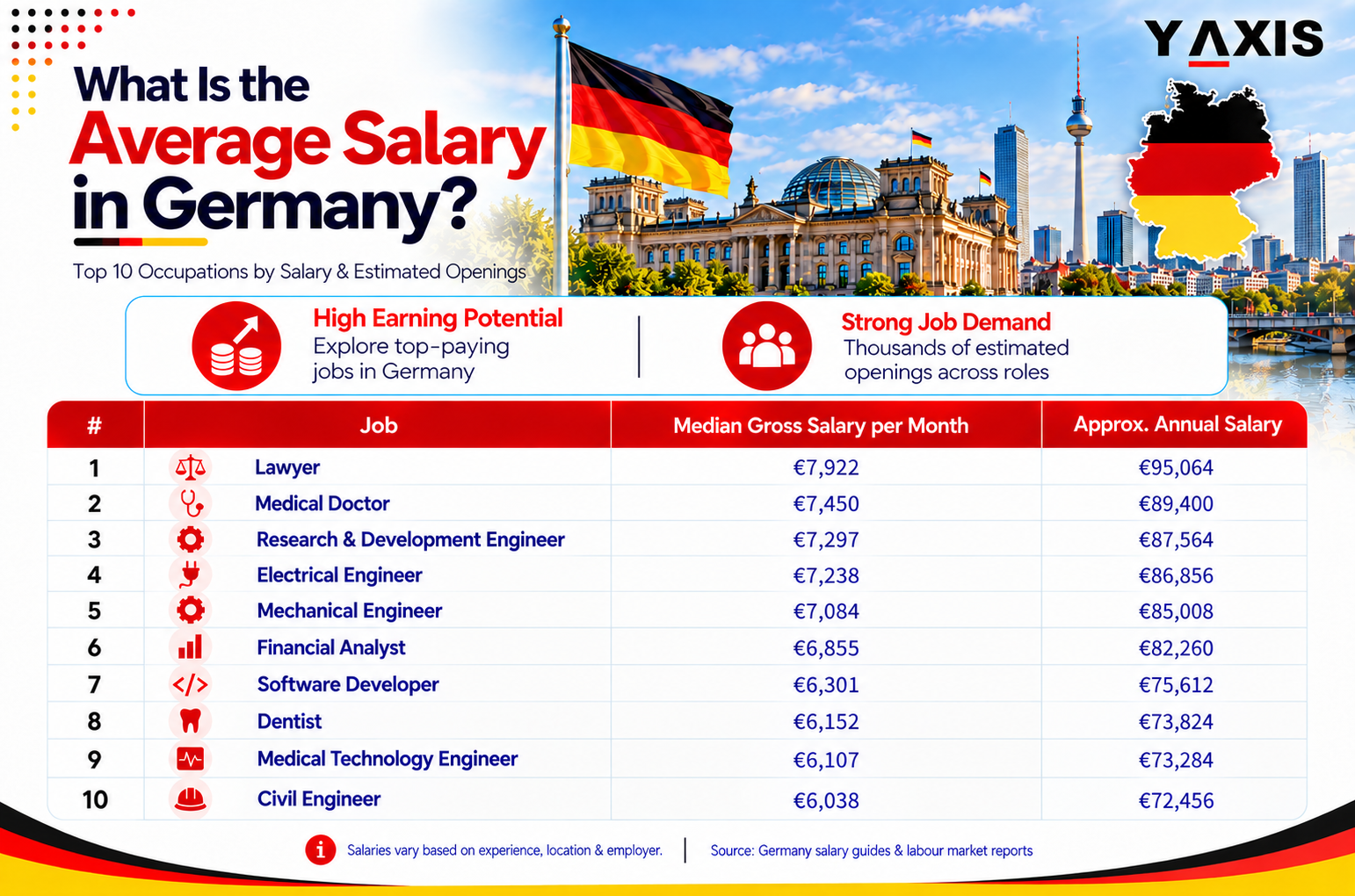
What is the Average Salary in Germany?