

Posted on July 31 2026
Top 10 Countries for Dentists to Work Abroad: Salary, Demand & PR Opportunities Compared

By , Editor & Director
Updated July 31 2026
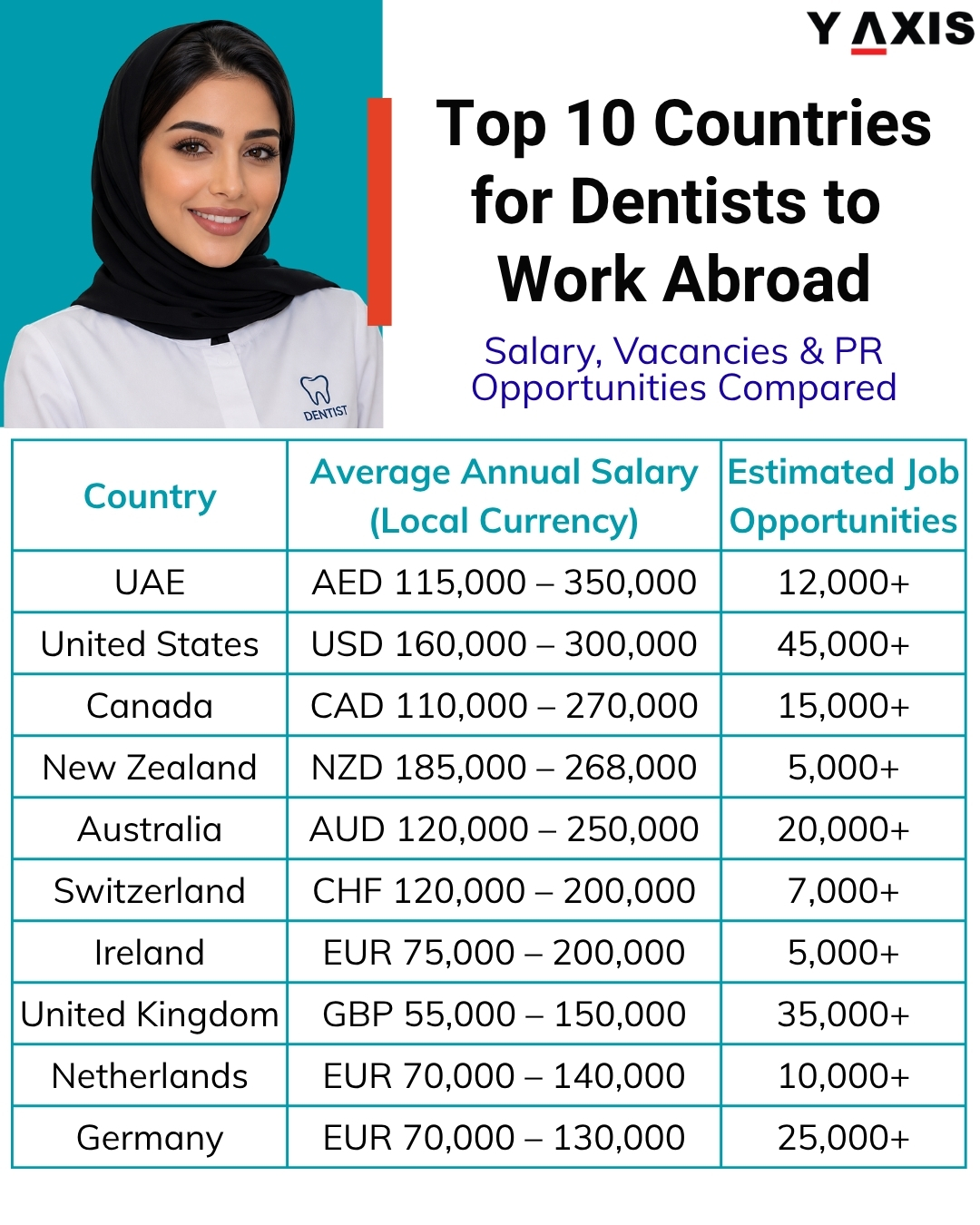
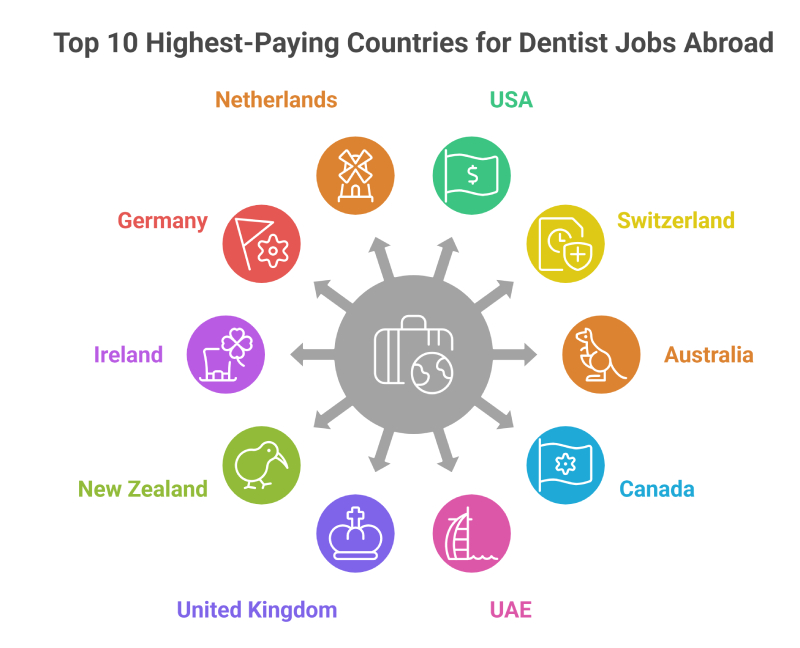
The top 10 countries for dentists to work abroad are Australia, Canada, the UK, the USA, New Zealand, Ireland, the UAE, Germany, Switzerland, and the Netherlands. These countries offer competitive salaries, high demand for dentists, diverse job opportunities, and pathways to permanent residence.
According to the World Health Organization (WHO), oral diseases affect nearly 3.7 billion people worldwide, while more than 68% of WHO Member States have fewer than 5 dentists per 10,000 people. Dentist shortages and rising demand for preventive, restorative, and specialist dental care are increasing job opportunities for dentists across major destinations worldwide.
*Want to work abroad? Sign up with Y-Axis Resume Marketing Services to find right job faster.
Why Is the Demand for Dentists Increasing Worldwide?
The demand for dentists is increasing worldwide due to oral diseases, ageing populations, dentist shortages, and growing demand for preventive and specialist dental care. These factors are creating more job opportunities for dentists across several countries.
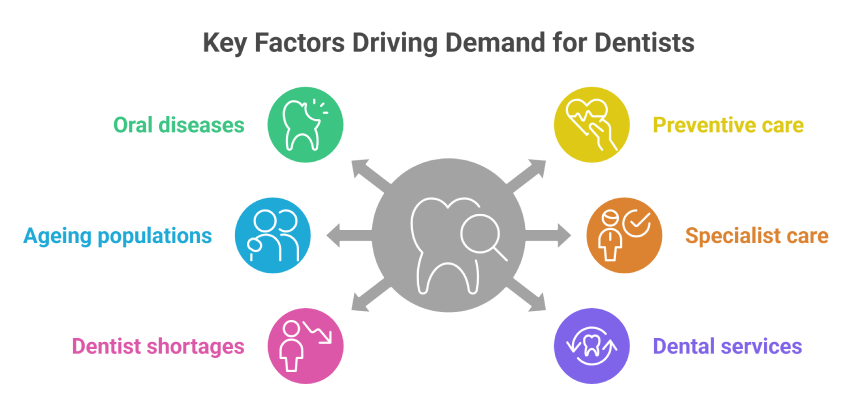
- Oral diseases: Nearly 3.7 billion people worldwide are affected by oral diseases.
- Ageing populations: Older adults require more restorative and periodontal care.
- Dentist shortages: Many regions have limited access to dentists.
- Preventive care: Demand for regular check-ups and early treatment is increasing.
- Specialist care: More patients require orthodontic, endodontic, and surgical care.
- Dental services: Growth in dental clinics is creating more dentist jobs.
How to Choose the Right Country for Dentist Jobs Abroad?
Choosing the right country for dentist jobs abroad depends on salary, job demand, licensing requirements, immigration options, and long-term career opportunities. Dentists should compare these factors before selecting a destination.
- Salary: Compare dentist salaries with taxes and living costs.
- Job demand: Check current demand and dentist shortages.
- Licensing: Review registration, exams, and qualification recognition.
- Visa options: Check available work visa pathways for dentists.
- PR pathways: Compare permanent residence options and requirements.
- Language: Check language requirements for dental registration and practice.
- Career scope: Consider opportunities in general and specialist dentistry.
Top 10 Highest-Paying Countries for Dentists to Work Abroad
The highest-paying countries for dentists include the USA, Switzerland, Australia, Canada, and the UAE. Annual dentist salaries across the top 10 countries can range from around AED 115,000 to over AED 850,000. Dentists can earn higher salaries in specialist fields such as orthodontics, prosthodontics, endodontics, periodontics, and oral and maxillofacial surgery, with strong earning potential across both general and specialist dentistry.
|
Country |
Average Annual Salary (Local Currency) |
Estimated Dentist Job Opportunities |
|
Australia |
AUD 120,000 – 250,000 |
20,000+ |
|
Canada |
CAD 110,000 – 270,000 |
15,000+ |
|
United Kingdom |
GBP 55,000 – 150,000 |
35,000+ |
|
United States |
USD 160,000 – 300,000 |
45,000+ |
|
New Zealand |
NZD 185,000 – 268,000 |
5,000+ |
|
Switzerland |
CHF 120,000 – 200,000 |
7,000+ |
|
UAE |
AED 115,000 – 350,000 |
12,000+ |
|
Ireland |
EUR 75,000 – 200,000 |
5,000+ |
|
Germany |
EUR 70,000 – 130,000 |
25,000+ |
|
Netherlands |
EUR 70,000 – 140,000 |
10,000+ |
*Want to work abroad? Sign up with Y-Axis Resume Marketing Services to find right job faster.
Best Countries for Dentists to Work and Settle Abroad
Australia, Canada, New Zealand, Germany, Ireland, and the UK are strong choices for dentists looking to work and settle abroad. These countries offer dentist jobs across public and private healthcare, pathways to permanent residence, family migration options, and routes to citizenship. Dentists can also access opportunities across general dentistry, specialist practices, hospitals, and community dental services while building a long-term career abroad.
Dentist Jobs in Australia
Australia is one of the best countries for dentists seeking jobs and permanent residence abroad. Dentists work across private practices, public dental services, hospitals, and community health centres, with demand extending to regional areas. Career options cover general dentistry as well as orthodontics, endodontics, periodontics, prosthodontics, and oral surgery. Overseas-trained dentists can complete the Australian Dental Council assessment and register with the Dental Board of Australia. Skilled migration and employer-sponsored visas support overseas dentists moving to Australia. Several visa pathways can also lead to permanent residence, combining dental career opportunities with long-term settlement.
|
Factor |
Details |
|
Dentist Job Market & Job Vacancies for the Next Decade |
Australia has strong demand for dentists, particularly in regional and remote areas. More than 20,000 dentist job opportunities are estimated over the next decade across private practices, public dental services, specialist clinics, and community oral health services. |
|
Investment in Dental & Oral Healthcare |
Australia is investing AUD 431 million in public dental services for adults, while the 10-year National Oral Health Plan will support oral disease prevention, access to dental care, and national oral health priorities. |
|
In-Demand Dentist Roles & Skills |
General dentists, orthodontists, endodontists, periodontists, prosthodontists, and oral and maxillofacial surgeons are in demand. Key skills include diagnosis, restorative dentistry, preventive care, treatment planning, dental implants, orthodontic care, and specialist procedures. |
|
Work Visa Options for Dentists |
Dentists can explore the Skills in Demand Visa (Subclass 482), Employer Nomination Scheme (Subclass 186), Skilled Work Regional Visa (Subclass 491), and Skilled Employer Sponsored Regional Visa (Subclass 494). |
|
Fast-Track Hiring Options |
Employer sponsorship, regional migration programs, and state or territory nomination can support dentist recruitment, particularly across regional Australia. |
|
PR / Long-Term Residence Opportunities |
Australia has PR pathways through skilled, employer-sponsored, and regional migration programs. Subclass 186 provides a permanent employer-sponsored route, while regional visa pathways can also lead to permanent residence. |
|
Licensing & Registration Requirements |
Dentists must register with the Dental Board of Australia through AHPRA. Overseas-trained dentists may need to complete the Australian Dental Council (ADC) assessment process when their qualification does not provide direct registration. |
|
Language Requirements |
Dentists must meet the Dental Board of Australia’s English-language skills standard through an accepted education pathway or English-language test. |
|
Dependants |
A spouse or partner and dependent children can be included in skilled and employer-sponsored visa applications under the selected visa route. |
|
Benefits for Family Members |
Family members can receive work and study rights based on their visa conditions. Access to Medicare and other public services depends on the visa category and residence status. |
*Want to Work in Australia? Let Y-Axis guide you through application process.
Dentist Jobs in Canada
Dentist jobs in Canada are available across private practices, dental groups, community clinics, hospitals, and specialist dental centres. Provinces and smaller communities also create opportunities for dentists as demand for oral healthcare continues. International dental graduates can complete NDEB certification and obtain a licence in the province or territory where they plan to work. Canada has several immigration routes for dentists, including work permits, Express Entry, and Provincial Nominee Programs. These programs can lead to permanent residence and support long-term settlement. Canada is a popular choice for dentists seeking a stable career, provincial job options, and a clear route to PR.
|
Factor |
Details |
|
Dentist Job Market & Job Vacancies for the Next Decade |
Canada has steady demand for dentists, supported by population growth, workforce retirements, and wider access to oral healthcare. More than 15,000 dentist job opportunities are estimated over the next decade across private practices, community clinics, public health services, and oral healthcare centres. |
|
Investment in Dental & Oral Healthcare |
Canada has committed CAD 250 million over three years and CAD 75 million in ongoing funding through the Oral Health Access Fund to expand oral healthcare services, increase provider capacity, and improve access in underserved communities. |
|
In-Demand Dentist Roles & Skills |
General dentists, orthodontists, periodontists, endodontists, prosthodontists, and oral and maxillofacial surgeons are among the key roles. In-demand skills include diagnosis, restorative dentistry, preventive care, treatment planning, and specialist dental procedures. |
|
Work Visa Options for Dentists |
Dentists with a Canadian job can work through an employer-specific work permit. Express Entry and Provincial Nominee Programs also provide immigration routes for dentists planning to settle in Canada. |
|
Fast-Track Hiring Options |
Dentists are classified under NOC 31110 and included in Express Entry’s healthcare and social services category. Category-based selection and provincial immigration programs can provide additional routes to permanent residence. |
|
PR / Long-Term Residence Opportunities |
Express Entry and Provincial Nominee Programs provide federal and provincial pathways to Canada PR, allowing dentists to work and settle permanently in the country. |
|
Licensing & Registration Requirements |
International dentists generally complete National Dental Examining Board of Canada (NDEB) certification and register with the dental regulatory authority in the province where they plan to practise. |
|
Language Requirements |
Dentists must meet English or French language requirements for their immigration route and the registration standards set by the province where they plan to practise. |
|
Dependants |
A spouse or common-law partner and dependent children can accompany dentists through Canadian work permit or permanent residence pathways. |
|
Benefits for Family Members |
Spouses may access an open work permit, while children can attend school. Provincial healthcare coverage for accompanying family members depends on immigration status and provincial rules. |
*Want to Work in Canada? Let Y-Axis guide you through application process.
Dentist Jobs in the United Kingdom
The UK has a large dental sector covering NHS dentistry, private practices, mixed practices, hospitals, and community dental services. This gives dentists career choices across both public and private dental care, along with opportunities in specialist dentistry. Overseas dentists can register with the General Dental Council through the registration route for their dental qualification. Dentist jobs with licensed sponsors can provide access to the Skilled Worker visa. This route can lead to Indefinite Leave to Remain after the required period. The UK combines varied dental practice settings, specialist career options, sponsored employment, and a pathway to permanent settlement.
|
Factor |
Details |
|
Dentist Job Market & Job Vacancies for the Next Decade |
The UK has strong demand for dentists, with around 35,000 job opportunities estimated over the next decade. Recruitment spans NHS dental practices, private clinics, hospitals, community dental services, and specialist dentistry. |
|
Investment in Dental & Oral Healthcare |
England has a £4.2 billion ring-fenced NHS dentistry budget supporting dental treatment, urgent care, improved patient access, and NHS dental services. |
|
In-Demand Dentist Roles & Skills |
General dentists, orthodontists, endodontists, periodontists, prosthodontists, and oral surgeons are among the key roles. Important skills include diagnosis, restorative dentistry, preventive care, treatment planning, orthodontics, and specialist dental procedures. |
|
Work Visa Options for Dentists |
Dentists can work in the UK through the Health and Care Worker Visa when sponsored by the NHS, an organisation providing NHS services, or another approved healthcare employer. |
|
Fast-Track Hiring Options |
The Health and Care Worker Visa provides a dedicated route for sponsored healthcare jobs, with lower visa fees and exemption from the Immigration Health Surcharge. |
|
PR / Long-Term Residence Opportunities |
Dentists on the Health and Care Worker route can apply for Indefinite Leave to Remain after 5 years of continuous residence on the route and meeting the settlement requirements. |
|
Licensing & Registration Requirements |
Dentists must register with the General Dental Council (GDC) before practising in the UK. Overseas-trained dentists can take the Overseas Registration Examination (ORE) when required for GDC registration. |
|
Language Requirements |
Dentists must demonstrate English proficiency through evidence accepted by the GDC and meet the English-language requirement for their UK work visa. |
|
Dependants |
Dentists on the Health and Care Worker Visa can bring their partner and dependent children to the UK through the dependant route. |
|
Benefits for Family Members |
Dependants can work and study in the UK and access NHS healthcare based on their immigration status. |
* Want to Work in the UK? Let Y-Axis guide you through the steps.
Dentist Jobs in the United States
Dentists in the United States have access to a large job market covering independent practices, dental groups, hospitals, community health centres, universities, and specialist clinics. The country has wide career scope in general dentistry, orthodontics, endodontics, periodontics, prosthodontics, paediatric dentistry, and oral and maxillofacial surgery. International dental graduates can follow the education and licensing route set by the state where they plan to practise. Employment-based visas support overseas dentists taking up jobs in the US. Employment-based Green Card pathways can also lead to permanent residence, while specialist, academic, and research careers provide additional options.
|
Factor |
Details |
|
Dentist Job Market & Job Vacancies for the Next Decade |
The United States has a large dental job market, with around 45,000 job opportunities projected over the next decade. Demand covers general and specialist dentistry, supported by growing needs for preventive, restorative, cosmetic, and age-related dental care. |
|
Investment in Dental & Oral Healthcare |
US spending on dental services is projected to exceed $300 billion by the early 2030s, covering preventive, restorative, cosmetic, and specialist dental care. |
|
In-Demand Dentist Roles & Skills |
General dentists, orthodontists, endodontists, periodontists, prosthodontists, and oral and maxillofacial surgeons are among the key roles. Important skills include diagnosis, restorative dentistry, preventive care, treatment planning, and specialist dental procedures. |
|
Work Visa Options for Dentists |
International dentists can work in the US through the H-1B Visa for specialty-occupation roles, with employer sponsorship supporting dental employment across different healthcare settings. |
|
Fast-Track Hiring Options |
Employer-sponsored and academic employment routes support international dentist recruitment across dental practices, healthcare organisations, universities, and academic dental centres. |
|
PR / Long-Term Residence Opportunities |
Dentists can pursue permanent residence through employment-based Green Card pathways, including the EB-2 and EB-3 categories. |
|
Licensing & Registration Requirements |
International dentists commonly complete an advanced-standing DDS or DMD program, pass the Integrated National Board Dental Examination (INBDE), and obtain a licence from the dental board in the state where they plan to practise. |
|
Language Requirements |
International dentists entering advanced-standing DDS or DMD programs generally demonstrate English proficiency, with TOEFL widely accepted by US dental schools. |
|
Dependants |
Dentists holding H-1B status can bring their spouse and unmarried children under 21 to the US through H-4 status. |
|
Benefits for Family Members |
H-4 family members can live and study in the US, while certain H-4 spouses can obtain employment authorisation. |
Dentist Jobs in New Zealand
New Zealand is a strong choice for dentists who want to combine employment with a direct residence pathway. Dentist and several dental specialist occupations are included on the Green List, connecting these careers with the Straight to Residence route. Dentist jobs are found across private practices, public dental services, hospitals, and community healthcare in different regions. Overseas-trained dentists can obtain registration with the Dental Council of New Zealand before starting clinical practice. Green List pathways make permanent migration a major benefit of choosing New Zealand. Dentists can build their careers while pursuing residence through an immigration route linked directly to their occupation.
|
Factor |
Details |
|
Dentist Job Market & Job Vacancies for the Next Decade |
New Zealand has strong demand for dentists across private practices, public dental services, and community oral healthcare, including areas outside the major cities. Around 5,000 dentist job opportunities are estimated over the next decade across general and specialist dentistry. |
|
Investment in Dental & Oral Healthcare |
New Zealand is investing more than NZ$5.8 billion in new health operating funding and over NZ$680 million in capital funding to strengthen frontline and community healthcare. Publicly funded oral healthcare also supports dental services for children and other covered groups. |
|
In-Demand Dentist Roles & Skills |
Dentists and Dental Specialists are included on New Zealand’s Green List. Career options include general dentistry, orthodontics, periodontics, endodontics, prosthodontics, and oral and maxillofacial surgery. Key skills include diagnosis, restorative care, preventive dentistry, and treatment planning. |
|
Work Visa Options for Dentists |
Dentists with a job offer from an accredited New Zealand employer can apply for the Accredited Employer Work Visa (AEWV). Green List pathways also provide residence options for Dentist and Dental Specialist roles. |
|
Fast-Track Hiring Options |
Dentist and Dental Specialist are Green List Tier 1 roles, providing access to the Straight to Residence pathway with a New Zealand job or job offer that meets Green List conditions. |
|
PR / Long-Term Residence Opportunities |
Dentists can gain New Zealand residence through the Straight to Residence Visa. After holding a resident visa for at least 2 years, they can apply for a Permanent Resident Visa after meeting the residence conditions. |
|
Licensing & Registration Requirements |
Dentists must register with the Dental Council of New Zealand and hold a current Annual Practising Certificate. Overseas-trained dentists follow the Dental Council registration pathway for their dental qualification. |
|
Language Requirements |
Dentists must meet the Dental Council of New Zealand’s English-language standard through an accepted education pathway or approved English-language test. |
|
Dependants |
Dentists can include or support visa applications for their partner and dependent children through the family provisions of their New Zealand work or residence visa. |
|
Benefits for Family Members |
Partners can receive work rights based on their visa, while dependent children can access education. Publicly funded healthcare for family members depends on their New Zealand visa or residence status. |
Dentist Jobs in Ireland
Ireland gives dentists an English-speaking career destination within the European Union. Dentist jobs are found mainly in private practices, with additional careers in public dental services, hospitals, community healthcare, and specialist clinics. Overseas dentists can register with the Dental Council of Ireland and enter the Irish dental workforce. Dentists from outside the EEA can use Ireland’s employment permit system to work in the country. Legal employment and residence can also lead towards long-term residence and citizenship. Ireland is a good option for dentists seeking European work experience, an English-speaking workplace, career development, and the opportunity to settle in the country.
|
Factor |
Details |
|
Dentist Job Market & Job Vacancies for the Next Decade |
Ireland has growing demand for dentists across private practices, public dental services, and community dental care. Around 5,000 dentist job opportunities are estimated over the next decade, covering general dentistry and specialist dental services. |
|
Investment in Dental & Oral Healthcare |
Ireland’s health budget has reached €27.4 billion, supporting healthcare services, infrastructure, and community care. Public funding also supports oral healthcare through HSE dental services and state-funded dental schemes. |
|
In-Demand Dentist Roles & Skills |
General dentists, orthodontists, periodontists, endodontists, prosthodontists, and oral surgeons are among the key roles. Important skills include diagnosis, restorative dentistry, preventive care, treatment planning, prosthodontics, and specialist dental procedures. |
|
Work Visa Options for Dentists |
Dentists from outside the EEA can work in Ireland through the General Employment Permit or Critical Skills Employment Permit, based on the occupation, position, and salary criteria. |
|
Fast-Track Hiring Options |
The Critical Skills Employment Permit provides a streamlined route for covered positions and does not require employers to complete a Labour Market Needs Test. |
|
PR / Long-Term Residence Opportunities |
Dentists on a Critical Skills Employment Permit can progress to Stamp 4, allowing them to work without an employment permit. Ireland also provides long-term residence after the required period of legal residence. |
|
Licensing & Registration Requirements |
Dentists must register with the Dental Council of Ireland before practising. Registration depends on where the dental qualification was obtained, with the Dental Council Examination providing a registration route for certain overseas dental qualifications. |
|
Language Requirements |
Dentists must demonstrate English-language competence through evidence or a language assessment accepted by the Dental Council of Ireland. |
|
Dependants |
Dentists can bring their spouse, partner, and dependent children to Ireland through family reunification provisions connected to their immigration permission. |
|
Benefits for Family Members |
Family members can access work, education, and healthcare based on the immigration permission granted to them in Ireland. |
Dentist Jobs in Switzerland
Switzerland has a strong private dental sector with careers across dental practices, specialist clinics, multidisciplinary centres, and hospitals. Dentists can work in general practice or develop careers in orthodontics, periodontics, prosthodontics, implant dentistry, and oral surgery. Overseas-trained dentists can enter the Swiss dental sector through qualification recognition and the language requirements for clinical practice. Work and residence permits support dentists taking up employment in the country. Continued residence can also lead towards permanent settlement. Switzerland is a good destination for dentists interested in private dentistry, specialist career options, European work experience, and long-term residence.
|
Factor |
Details |
|
Dentist Job Market & Job Vacancies for the Next Decade |
Switzerland has steady demand for dentists across private practices, dental clinics, and specialist centres. Around 7,000 dentist job opportunities are estimated over the next decade, covering general dentistry, orthodontics, oral surgery, and other specialist dental services. |
|
Investment in Dental & Oral Healthcare |
Switzerland’s healthcare expenditure is projected to reach CHF 109.6 billion by 2027. The Health2030 Strategy also supports advances in digital health, medical technology, healthcare quality, and health data systems through 2030. |
|
In-Demand Dentist Roles & Skills |
General dentists, orthodontists, periodontists, endodontists, prosthodontists, and oral surgeons are among the key roles. Important skills include restorative dentistry, preventive care, dental implants, prosthodontics, treatment planning, and specialist dental procedures. |
|
Work Visa Options for Dentists |
Dentists can work in Switzerland through L or B residence permits, with employers supporting the work authorisation process for overseas hires. |
|
Fast-Track Hiring Options |
Employer-led recruitment and cantonal permit processing support dentist hiring across private practices, dental clinics, and healthcare facilities in Switzerland. |
|
PR / Long-Term Residence Opportunities |
Dentists can progress to the C Permit, Switzerland’s settlement permit, after completing the required period of legal residence. |
|
Licensing & Registration Requirements |
Overseas dentists complete dental qualification recognition through MEBEKO and registration in MedReg, Switzerland’s register of medical professions, before starting dental practice. |
|
Language Requirements |
Dentists need proficiency in German, French, or Italian based on the canton and the language used for clinical practice and patient communication. |
|
Dependants |
Dentists can bring their spouse and dependent children to Switzerland through the family reunification route. |
|
Benefits for Family Members |
Family members can access education and healthcare, while spouses can receive work rights based on their residence status and family reunification route. |
*Want to Work in Switzerland? Let Y-Axis guide you through application process.
Dentist Jobs in the UAE
The UAE is a major destination for dentist jobs in the Middle East, particularly in Dubai, Abu Dhabi, and Sharjah. Private clinics, medical centres, and hospitals recruit dentists across general dentistry, orthodontics, cosmetic dentistry, implant dentistry, endodontics, periodontics, prosthodontics, and oral surgery. Dentists also benefit from the UAE’s absence of personal income tax. Licensing is handled by health authorities such as DHA, DoH, and MOHAP based on the place of practice. Healthcare employers can sponsor work and residence visas, while longer-term residence categories give dentists additional options for building an extended career in the UAE.
|
Factor |
Details |
|
Dentist Job Market & Job Vacancies for the Next Decade |
The UAE has growing demand for dentists, supported by population growth, medical tourism, and expansion of private dental and specialist healthcare services. Around 12,000 dentist job opportunities are estimated over the next decade, particularly across Dubai, Abu Dhabi, and other major healthcare centres. |
|
Investment in Dental & Oral Healthcare |
The UAE healthcare market is projected to exceed $50 billion by 2029, supported by investment in private healthcare, medical tourism, digital health, AI, and specialist services. Dental care forms an important part of the country’s expanding private healthcare market. |
|
In-Demand Dentist Roles & Skills |
General dentists, orthodontists, endodontists, periodontists, prosthodontists, and oral and maxillofacial surgeons are among the key roles. In-demand skills include cosmetic dentistry, dental implants, restorative care, orthodontics, diagnosis, and specialist dental procedures. |
|
Work Visa Options for Dentists |
Dentists can work in the UAE through an employer-sponsored work visa and residence permit. The Green Visa and Golden Visa provide additional residence options under their respective visa categories. |
|
Fast-Track Hiring Options |
Hospitals, dental clinics, and healthcare groups can sponsor overseas dentists and manage the work permit and residence process after the required healthcare licence is obtained. |
|
PR / Long-Term Residence Opportunities |
Dentists can build a long-term career in the UAE through renewable employment-based residence. The Golden Visa also provides long-term renewable residence for dentists under the specified visa categories. |
|
Licensing & Registration Requirements |
Dentists need a licence from the health authority covering their place of practice, including DHA in Dubai, DoH in Abu Dhabi, or MOHAP across the jurisdictions it regulates. |
|
Language Requirements |
English is widely used across UAE dental clinics and healthcare facilities, while Arabic can support communication with Arabic-speaking patients. |
|
Dependants |
Dentists with UAE residence can sponsor their spouse and children through the country’s family residence system. |
|
Benefits for Family Members |
Sponsored family members can live, study, and access healthcare in the UAE under their family residence status. |
Dentist Jobs in Germany
Germany has dentist jobs across private practices, group clinics, hospitals, university medical centres, and specialist dental services. General dentistry and specialised dental care both provide career options across the country. Overseas-trained dentists can obtain Approbation through Germany’s qualification recognition and German-language process, allowing them to practise independently. Skilled employment residence routes support dentists from outside the EU moving to Germany for work. Continued employment and residence can lead to a settlement permit. Germany gives dentists access to clinical and specialist careers, European healthcare experience, and a pathway from skilled employment to permanent residence.
|
Factor |
Details |
|
Dentist Job Market & Job Vacancies for the Next Decade |
Germany has steady demand for dentists, supported by workforce replacement and continued need for dental care across the country. Around 25,000 dentist job opportunities are estimated over the next decade across dental practices, clinics, hospitals, and specialist dental services. |
|
Investment in Dental & Oral Healthcare |
Germany spends more than €20 billion annually on dental treatment and dentures through statutory health insurance, supporting preventive, restorative, prosthetic, and specialist dental care. |
|
In-Demand Dentist Roles & Skills |
General dentists, orthodontists, oral surgeons, periodontists, and other dental specialists are among the key roles. Important skills include diagnosis, restorative dentistry, preventive care, prosthodontics, treatment planning, and oral surgery. |
|
Work Visa Options for Dentists |
Dentists can work in Germany through the Skilled Worker Visa or EU Blue Card after obtaining recognition of their dental qualification and securing employment. |
|
Fast-Track Hiring Options |
Germany’s Accelerated Skilled Worker Procedure helps employers coordinate qualification recognition, employment approval, and visa processing when recruiting dentists from abroad. |
|
PR / Long-Term Residence Opportunities |
Skilled-worker residence routes can lead to a German settlement permit. The EU Blue Card also provides a faster route to permanent settlement after the required residence period. |
|
Licensing & Registration Requirements |
Overseas-trained dentists complete qualification recognition and obtain Approbation, the state licence that allows them to practise dentistry in Germany. |
|
Language Requirements |
Dentists generally need German at B2 level along with a C1-level specialist language examination for dental practice and Approbation. |
|
Dependants |
Dentists with a German work residence permit can bring their spouse and dependent children through Germany’s family reunification route. |
|
Benefits for Family Members |
Family members can access work, public education, and healthcare through Germany’s family reunification and residence system. |
*Want to Work in Germany? Let Y-Axis guide you through application process.
Dentist Jobs in the Netherlands
Dentist jobs in the Netherlands are found across private dental practices, group clinics, oral healthcare centres, hospitals, and specialist services. International dentists can join the workforce through dental qualification recognition, Dutch-language proficiency, and registration in the BIG register. Once registered, dentists can develop careers across general dentistry and specialist oral healthcare. Employment and residence routes allow dentists from outside the EU to work and live in the Netherlands. Continued legal residence can lead to permanent residence after the required period. The Netherlands combines dental career opportunities, European work experience, and long-term residence options for dentists planning to settle abroad.
|
Factor |
Details |
|
Dentist Job Market & Job Vacancies for the Next Decade |
The Netherlands has steady demand for dentists across private practices, group clinics, and multidisciplinary oral healthcare centres. Around 10,000 dentist job opportunities are estimated over the next decade across general and specialist dentistry. |
|
Investment in Dental & Oral Healthcare |
Dental practices in the Netherlands generate more than €3.6 billion annually, while continued healthcare investment supports oral healthcare services, digitalisation, and modern dental care across the country. |
|
In-Demand Dentist Roles & Skills |
General dentists, orthodontists, oral surgeons, periodontists, and other dental specialists are among the key roles. Important skills include restorative dentistry, preventive care, diagnosis, prosthodontics, treatment planning, and specialist dental procedures. |
|
Work Visa Options for Dentists |
Dentists can work in the Netherlands through the Highly Skilled Migrant residence permit, EU Blue Card, and other employer-sponsored work and residence routes. |
|
Fast-Track Hiring Options |
The Highly Skilled Migrant Scheme allows recognised sponsors to recruit dentists from abroad through a streamlined immigration process. |
|
PR / Long-Term Residence Opportunities |
Dentists can apply for permanent residence after 5 years of continuous legal residence in the Netherlands and meeting the residence conditions. |
|
Licensing & Registration Requirements |
Overseas-trained dentists complete qualification recognition and obtain BIG registration before practising as a dentist in the Netherlands. |
|
Language Requirements |
Dentists must demonstrate Dutch-language proficiency for qualification recognition, BIG registration, and patient-facing dental practice. |
|
Dependants |
Dentists with a Dutch work and residence permit can bring their partner and dependent children through the family residence route. |
|
Benefits for Family Members |
Family members can access education and the Dutch healthcare system, while partners can receive work rights based on the residence permit connected to the dentist’s employment. |
Job Outlook for Dentists over the Next Decade
The job outlook for dentists over the next decade is positive, with demand expected to remain strong across general and specialist dentistry. Population growth, ageing populations, greater awareness of oral health, and increasing demand for preventive and restorative dental care are supporting employment worldwide. Orthodontists, endodontists, periodontists, prosthodontists, oral surgeons, and general dentists are expected to see continued career opportunities.
Regional and community healthcare needs are also creating dentist jobs outside major cities in countries such as Australia, Canada, and New Zealand. Growth in private dental care, cosmetic dentistry, dental implants, and specialist treatments will further support international career opportunities for dentists.
*Want to work abroad? Sign up with Y-Axis Resume Marketing Services to find right job faster.
FAQs
Which country is best for dentists to work abroad?
Australia is one of the best countries for dentists because of its high salaries, strong demand, and skilled migration pathways. Canada and New Zealand are popular for permanent residence, while the United States and Switzerland offer higher earning potential. The best destination depends on your qualifications, licensing eligibility, career goals, and preferred immigration pathway.
Which country pays the highest salary for dentists?
The United States is among the highest-paying countries for dentists, especially for specialists. Switzerland, Australia, Canada, and the UAE also offer competitive salaries. Earnings depend on your specialty, experience, location, employer, and whether you work in a private clinic, hospital, or public healthcare system.
Which countries have the highest demand for dentists?
Australia, Canada, the UK, New Zealand, Germany, Ireland, and the UAE continue to recruit dentists to address workforce shortages and growing oral healthcare needs. Opportunities are available across private clinics, hospitals, and community healthcare services, making dentistry an in-demand profession in several countries.
Which countries offer permanent residence for dentists?
Australia, Canada, New Zealand, Germany, Ireland, the Netherlands, Switzerland, and the UK offer permanent residence pathways for eligible dentists. Requirements generally include recognised qualifications, professional registration, relevant work experience, language proficiency, and meeting the country's immigration criteria. The UAE offers long-term residence options instead of permanent residence.
Which countries offer visa sponsorship for dentists?
Australia, Canada, the UK, New Zealand, Germany, Ireland, the Netherlands, Switzerland, the United States, and the UAE offer employer-sponsored work visas for qualified dentists. Sponsorship requirements vary by country and usually depend on professional registration, employer eligibility, and meeting immigration and licensing requirements.
How can I get a dentist job abroad?
Start by choosing the country where you want to work and checking its licensing requirements. Most countries require a recognised dental qualification, professional registration, language proficiency, and, in some cases, a job offer. Once eligible, you can apply for the appropriate work visa and begin your overseas career.
What qualifications do I need to work as a dentist abroad?
Most countries require a recognised dental qualification, professional registration, and proof of language proficiency. Depending on the destination, you may also need work experience, credential assessment, or a licensing examination before you can practise. Qualification requirements vary according to each country's dental regulatory authority.
Do I need a licence to work as a dentist abroad?
Yes. You must obtain professional registration or a licence before practising dentistry in another country. Licensing authorities assess your qualifications, clinical competency, and language proficiency. Some countries also require overseas dentists to complete written or practical examinations before granting registration.
Which exams are required for dentists to work abroad?
The licensing examination depends on the destination country. Australia requires the ADC assessment, Canada uses the NDEB process, the UK may require the ORE, and the United States requires the INBDE with state licensing requirements. Check the dental authority in your chosen country before applying.
Is IELTS required to work as a dentist abroad?
Many countries require proof of English-language proficiency for professional registration or immigration. IELTS is widely accepted, while some countries also recognise OET, TOEFL, or PTE. The required score varies depending on the licensing authority, visa program, and destination country.
Can dentists working in the UAE apply for jobs abroad?
Yes. Dentists working in the UAE can apply for overseas jobs after meeting the licensing and registration requirements of their chosen country. Australia, Canada, New Zealand, the UK, Germany, Ireland, and several other countries continue to recruit qualified dentists through employer-sponsored work visas and skilled migration programs.
Can I move abroad with my family as a dentist?
Yes. Many countries allow dentists to include their spouse or partner and dependent children in their work visa or permanent residence application. Depending on the destination, family members may receive access to healthcare, education, and work rights, making it easier to settle together abroad.
Which country is easiest for dentists to immigrate to?
Australia, Canada, and New Zealand are among the easiest countries for qualified dentists because they offer skilled migration pathways and continue to recruit overseas dental professionals. Your eligibility depends on factors such as qualifications, professional registration, work experience, language proficiency, and the country's immigration requirements.
What are the highest-paying dental specialties abroad?
Orthodontics, oral and maxillofacial surgery, prosthodontics, endodontics, and periodontics are among the highest-paying dental specialties in many countries. These roles require additional training and specialist registration but often provide higher salaries, strong demand, and opportunities to work in private practices, hospitals, and specialist dental centres.
Is Australia a good country for dentists?
Yes. Australia offers competitive salaries, strong demand for dentists, and opportunities across private clinics, hospitals, and public dental services. Qualified dentists may also be eligible for employer-sponsored visas or skilled migration programs that can lead to permanent residence after meeting the required eligibility criteria.
Is Canada a good country for dentists?
Yes. Canada offers excellent career opportunities for dentists through competitive salaries, growing demand, and multiple immigration pathways. After obtaining professional registration, qualified dentists can work in private practices, hospitals, or community clinics and may become eligible for permanent residence through skilled immigration programs.
Is New Zealand a good country for dentists?
Yes. New Zealand has a steady demand for dentists across public and private healthcare. Qualified dentists can access opportunities in hospitals, community dental services, and private practices. Eligible professionals may also benefit from Green List pathways that support faster residence options for selected occupations.
Is the UK a good country for dentists?
Yes. The UK continues to recruit dentists for NHS services, private practices, hospitals, and community healthcare. Overseas dentists who meet General Dental Council registration requirements can apply for sponsored jobs and may qualify for Indefinite Leave to Remain after completing the required period of lawful residence.
Which European countries are best for dentists?
Germany, Ireland, Switzerland, and the Netherlands are among the best European countries for dentists because they offer competitive salaries, growing demand, and modern healthcare systems. Dentists must meet local licensing and language requirements before practising, while several countries also provide long-term residence opportunities for eligible professionals.
Which country is best for dentists seeking permanent residence?
Australia, Canada, and New Zealand are among the best countries for dentists seeking permanent residence because they offer skilled migration programs, continued demand, and clear settlement pathways. Germany, Ireland, the Netherlands, and the UK also provide long-term residence options for eligible dentists who meet immigration and licensing requirements.
Tags:
Dentist Jobs Abroad
Best Countries for Dentists
Highest Paying Countries for Dentists
Dentist Salary Abroad
Overseas Dentist Jobs
International Dentist Jobs
Dentist Jobs with Visa Sponsorship
Countries in Demand for Dentists
Dentist Work Visa
PR Pathways for Dentists
Share
Y-Axis Services

Get it on your mobile
Get News alerts
Contact Y-Axis
Latest Article
Popular Post
Trending Article
Posted On September 17 2026
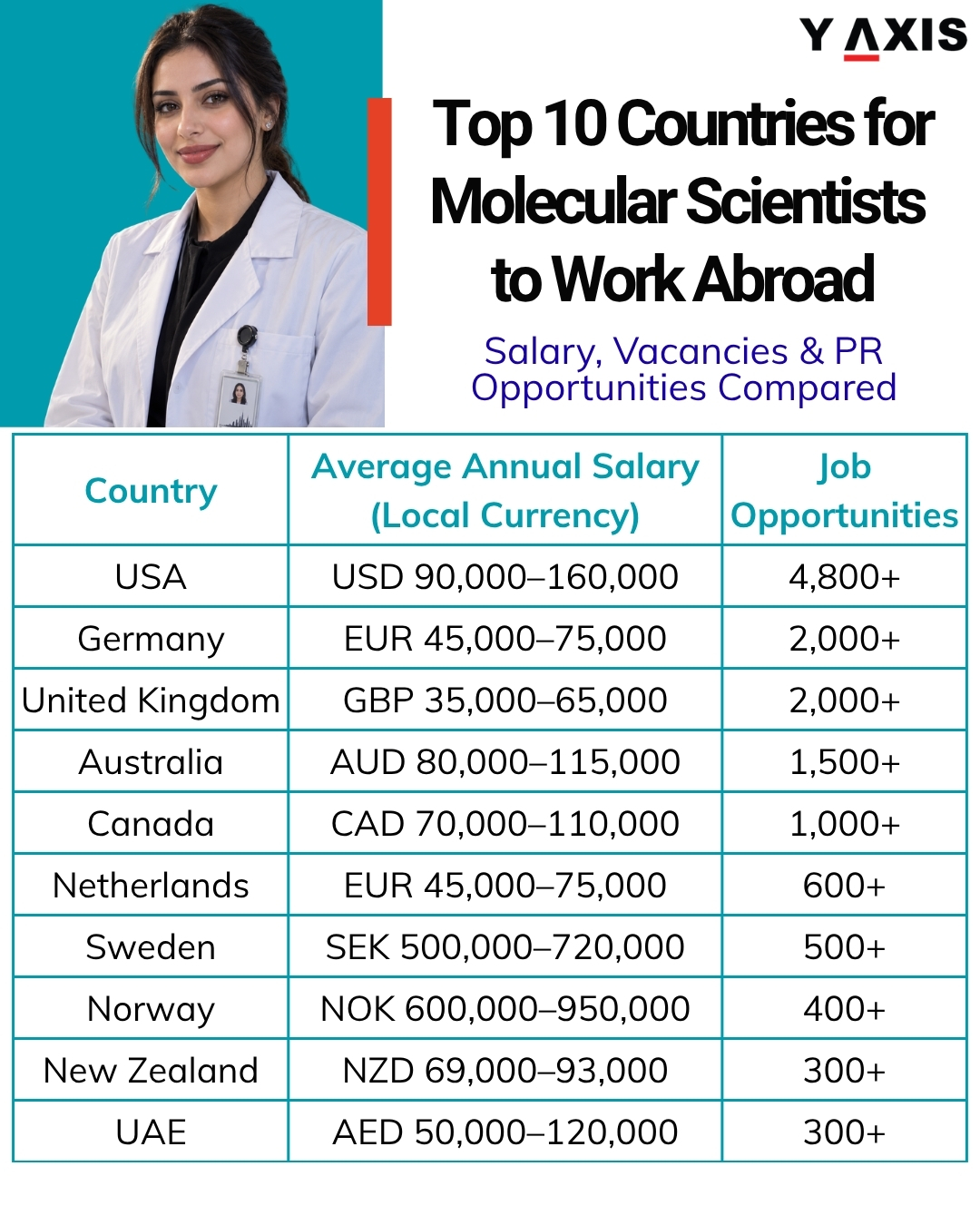
Top 10 Countries for Molecular Scientists to Work Abroad: Salary, Demand & PR Opportunities Compared