

Posted on October 23 2026
What Are the Different Types of Germany Visas to Immigrate?

By , Editor & Director
Updated October 23 2026
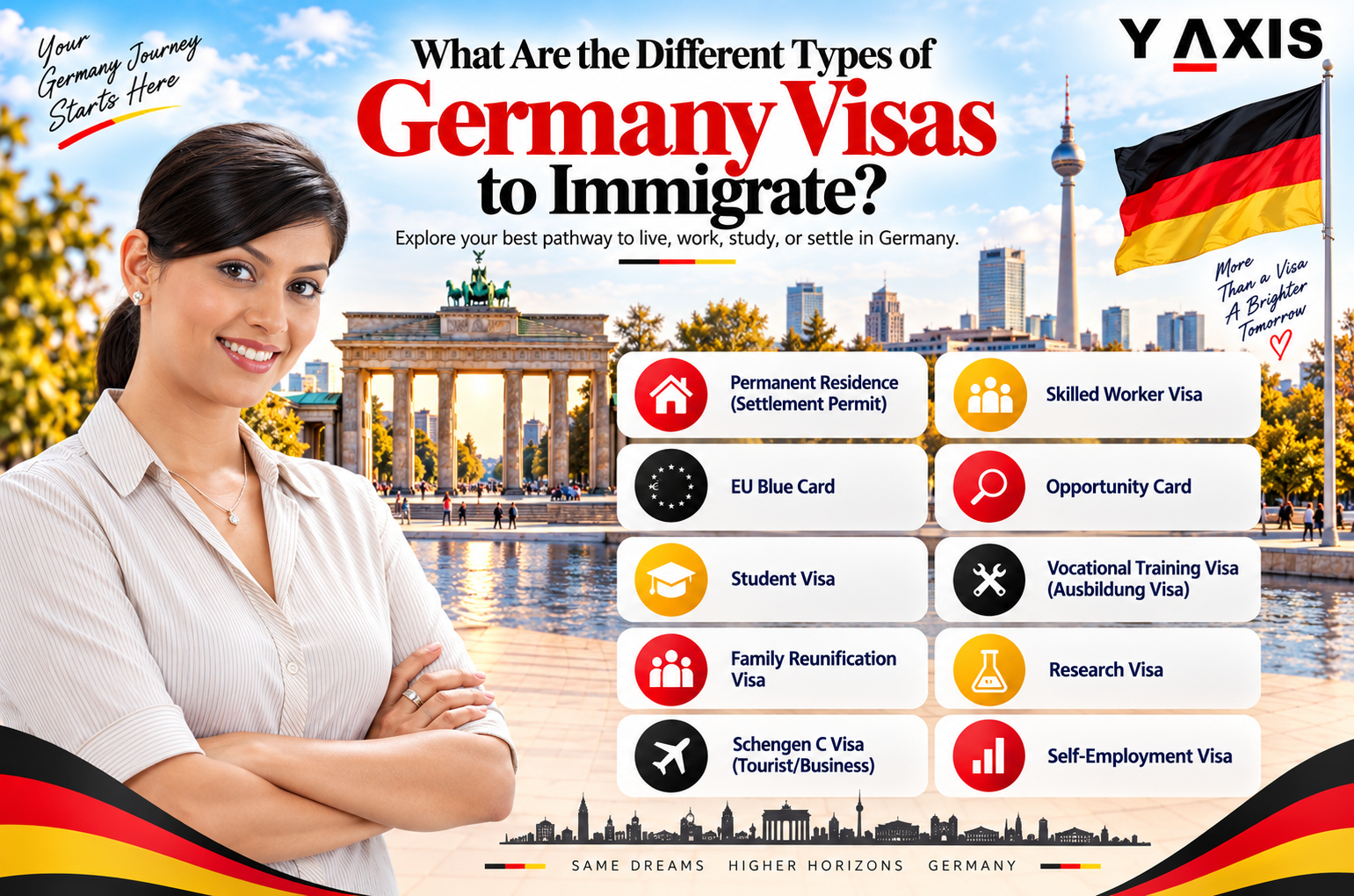
There are several types of Germany visas for individuals planning to move from the UAE for work, job search, higher education, vocational training, business or family reunification. Skilled professionals with a qualifying job offer can apply for the EU Blue Card or Skilled Worker Visa, while the Opportunity Card allows qualified jobseekers to search for employment in Germany.
Students admitted to German universities, individuals pursuing vocational training, entrepreneurs planning to establish a business and family members joining relatives in Germany can also apply for their respective visa categories. After meeting the required residence period and other eligibility criteria, applicants can apply for permanent residence through a settlement permit.
*Want to migrate to Germany? Book a free consultation with Y-Axis today.
Types of Germany Visas for Immigration
Germany offers two main visa types: short-stay Schengen visas (Type C) for visits of up to 90 days and long-stay national visas (Type D) for stays exceeding 90 days. Type C visas cover tourism, business trips and short visits, while Type D visas are intended for long-term purposes such as employment, higher education, vocational training and family reunification. Those planning to relocate to Germany generally need a national visa before traveling, depending on their nationality and purpose of stay.
| Germany Visa Type | Who Can Apply? | Main Purpose |
|---|---|---|
| Skilled Worker Visa | Qualified professionals with a recognised qualification and a German job offer | To work in Germany |
| EU Blue Card | Qualified professionals with a qualifying job offer and required salary | To work in a qualified role and access a faster PR route |
| Opportunity Card | Skilled workers meeting qualification or points-based criteria | To search for a job in Germany |
| Student Visa | Students admitted to a German university | To study in Germany |
| Vocational Training Visa | Applicants with a confirmed training place | To complete vocational training in Germany |
| Family Reunification Visa | Qualifying family members of people living in Germany | To join family in Germany |
| Research Visa | Researchers with a hosting agreement or research contract | To conduct research in Germany |
| Self-Employment Visa | Entrepreneurs and freelancers meeting the relevant requirements | To start a business or work independently |
| Settlement Permit | Foreign nationals meeting residence and settlement requirements | To live permanently in Germany |
Germany Visa Eligibility Requirements
To qualify for a Germany visa, applicants must meet the requirements for their chosen immigration route. Work visa applicants generally need a qualifying job offer and recognized qualifications, while students need admission to a German university. The Opportunity Card requires a recognized qualification or sufficient points, and family reunification requires proof of the family relationship. Applicants must also prepare the required documents, including a valid passport, proof of funds and health insurance, where applicable.
- Valid passport: Hold a passport with sufficient validity and blank pages for the visa application.
- Purpose of relocation: Have a German job offer, university admission, vocational training place, business plan or qualifying family relationship, depending on the visa.
- Recognized qualifications: Meet the qualification requirements for the Skilled Worker Visa or EU Blue Card.
- Proof of funds: Show sufficient funds for living expenses when required, such as for the Student Visa or Opportunity Card.
- Language proficiency: Provide proof of German or English proficiency when required by the visa category.
- Health insurance: Arrange health insurance that covers your stay in Germany.
- UAE residence status: Hold a valid UAE residence permit and an Emirates ID issued at least 6 months before applying for a national visa at the German Consulate General in Dubai.
*Not sure which Germany visa suits you? Get free eligibility assessment from Y-Axis today.
How to Apply for a Germany Visa from the UAE?
To apply for a Germany visa from the UAE, choose the visa category that matches your purpose, check the requirements and prepare the necessary documents. Submit your application through the appropriate German consular service, attend an appointment if required, provide biometrics and pay the visa fee.
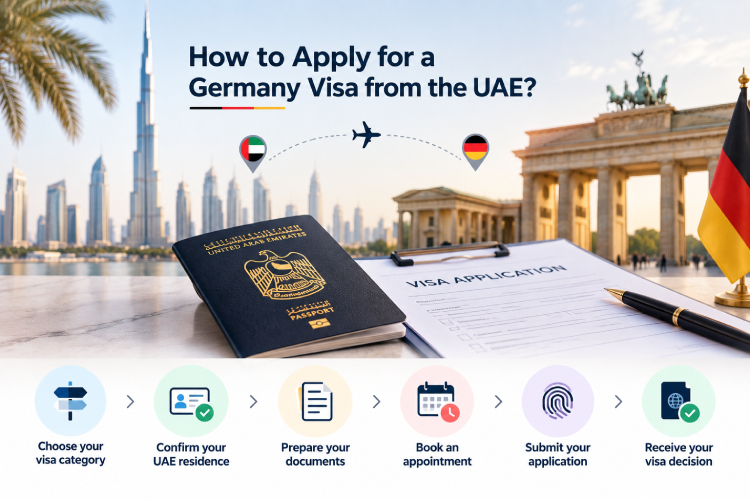
Step 1: Choose your visa category
Select the appropriate visa based on your purpose, such as the EU Blue Card, Skilled Worker Visa, Opportunity Card, Student Visa or Family Reunification Visa.
Step 2: Confirm your UAE residence
Check the German Consulate General in Dubai’s residence requirements and Emirates ID validity rules before applying.
Step 3: Prepare your documents
Gather your passport, application form, qualifications, proof of funds, health insurance and other documents required for your visa category. Arrange translations where necessary.
Step 4: Book an appointment
Follow the official German mission’s appointment instructions and check regularly for available slots.
Step 5: Submit your application
Attend your appointment, submit your documents, provide biometrics if required and pay the applicable visa fee.
Step 6: Receive your visa decision
Wait for the German authorities to process your application. Once approved, check the visa details carefully before traveling to Germany.
*Want to apply for German Visa? Book a free consultation with Y-Axis today.
Germany Visa Fees and Processing Time
The Germany national visa (Type D) fee is €75 for adults and €37.50 for applicants under 18. Processing can take from 7 working days to 12 weeks or longer, depending on the visa category and additional checks. Apply up to 3 months before your planned travel date and submit all required documents to help avoid delays.
| Germany Visa Type | Estimated Processing Time |
|---|---|
| Skilled Worker Visa | 4–8 weeks |
| EU Blue Card | 2–6 weeks |
| Opportunity Card | 4–8 weeks |
| Student Visa | 4–12 weeks |
| Vocational Training Visa | 4–12 weeks |
| Family Reunification Visa | 8–16 weeks |
| Research Visa | 3–8 weeks |
| Self-Employment Visa | 8–16 weeks |
*Planning to migrate to Germany? Get expert guidance from Y-Axis professionals.
FAQs
What are the different types of Germany visas for immigration?
Germany offers several long-stay national visas (Type D), including the EU Blue Card, Skilled Worker Visa, Opportunity Card, Student Visa, Vocational Training Visa, Self-Employment Visa and Family Reunification Visa. The right option depends on your qualifications and purpose of relocation.
Which Germany visa is best for immigration from the UAE?
The best visa depends on your qualifications and purpose. The EU Blue Card suits qualified professionals with a qualifying job offer and salary, while the Skilled Worker Visa is for qualified workers with a job offer. The Opportunity Card allows eligible applicants to search for jobs without an offer.
Can I move to Germany from the UAE without a job offer?
Yes. The Opportunity Card allows qualifying applicants to search for jobs in Germany without an existing offer. Applicants must meet the qualification or points-based requirements and demonstrate sufficient funds, health insurance and language proficiency.
What is the difference between a Germany Schengen visa and a national visa?
A Schengen visa (Type C) generally allows stays of up to 90 days within a 180-day period for tourism and short business trips. A national visa (Type D) is for stays exceeding 90 days, including employment, study, vocational training and family reunification.
How much does a Germany immigration visa cost?
The standard national visa fee is €75 for adults and €37.50 for applicants under 18. Applicants at the German Consulate General in Dubai pay in AED. Additional costs may include health insurance, document translations and proof of funds.
How long does it take to get a Germany visa from the UAE?
Processing can take up to 12 weeks or longer, depending on the visa category, document verification and additional approvals. Submit a complete application well before your planned travel date to help avoid delays.
Where can I apply for a Germany visa from the UAE?
UAE residents can apply through the German Consulate General in Dubai if they meet its residence requirements. Generally, their Emirates ID must have been issued at least six months before the application date. Some national visa applications can be started online.
What are the requirements for a Germany Opportunity Card?
Applicants must have a qualification recognized in Germany or qualify through the points-based route. The points route generally requires a qualifying foreign qualification, at least A1-level German or B2-level English, and a minimum of six points. Applicants must also prove sufficient funds.
Can I bring my family to Germany after moving from the UAE?
Yes. Spouses and qualifying children can generally apply for family reunification, subject to residence and other requirements. Certain skilled workers may also bring their parents or parents-in-law under specific conditions.
Can I get permanent residence in Germany after moving from the UAE?
Yes. You may qualify for a settlement permit after meeting the residence and other requirements. EU Blue Card holders may qualify after 27 months with A1-level German or 21 months with B1-level German, subject to the remaining conditions.
Tags:
Germany Visa
Germany Immigration
Types of Germany Visas
Germany Visa from UAE
Germany Work Visa
Germany Skilled Worker Visa
Germany Opportunity Card
EU Blue Card
Germany Student Visa
Germany Family Reunification Visa
Share
Y-Axis Services

Get it on your mobile
Get News alerts
Contact Y-Axis
Latest Article
Popular Post
Trending Article
Posted On October 23 2026
What Are the Different Types of Germany Visas to Immigrate?