


Posted on October 15 2026
Canada vs. Australia for IT Professionals: Which Country Should You Choose?

By , Editor
Updated October 15 2026
Canada and Australia are popular destinations for IT professionals seeking overseas jobs, competitive salaries and permanent residency (PR). Australia offers attractive IT salaries and mandatory employer superannuation contributions, while Canada provides access to North American technology companies and immigration pathways through Express Entry and Provincial Nominee Programs (PNPs). Both countries hire software engineers, cybersecurity specialists, cloud engineers and data scientists. Compare IT salaries, job opportunities, income taxes, living costs, work visa options and PR pathways to decide which country best suits your career and settlement goals.
*Want to work abroad? Let Y-Axis help you through application process.
Canada vs. Australia for IT Professionals: Quick Comparison
| Factor | Canada | Australia |
|---|---|---|
| Average Annual IT Salary | CAD 80,000–150,000 | AUD 90,000–180,000 |
| IT Job Openings Over the Next 10 Years | 150,000+ | 250,000+ |
| In-Demand IT Job Roles | Software developers, software engineers, cybersecurity specialists, cloud engineers, data scientists and AI/ML specialists | Software developers, software engineers, cybersecurity specialists, cloud engineers, data analysts and ICT managers |
| Major Cities for IT Jobs | Toronto, Vancouver, Ottawa, Montréal and Calgary | Sydney, Melbourne, Brisbane, Canberra and Perth |
| Fast-track Hiring Pathways | Global Talent Stream | Skills in Demand visa (subclass 482) |
| Work Visa Options | Employer-specific work permits and other work permit pathways | Skills in Demand visa (subclass 482), Skilled Independent visa (subclass 189), Skilled Nominated visa (subclass 190) and Skilled Work Regional visa (subclass 491) |
| Permanent Residency Pathways | Express Entry and Provincial Nominee Program (PNP) | Skilled Independent visa (subclass 189), Skilled Nominated visa (subclass 190) and employer-sponsored pathways |
| Estimated Monthly Living Costs | CAD 2,500–4,200 | AUD 2,800–4,700 |
| Family Migration Options | Include your spouse and dependent children in permanent residence applications | Include your spouse and dependent children in visa applications that allow family members |
Canada vs. Australia: Which Country Offers Better Opportunities for IT Professionals?
Australia generally offers higher IT salaries, 12% employer superannuation contributions and four weeks of paid annual leave for most full-time employees. In comparison, Canada offers access to major technology hubs such as Toronto, Vancouver and Montreal, along with PR pathways through Express Entry and Provincial Nominee Programs (PNPs). Both countries offer attractive career opportunities for IT professionals, with the right choice depending on salary expectations, living costs and long-term settlement goals.

Canada may be the right choice if you:
- Want to pursue PR through Express Entry or a Provincial Nominee Program (PNP).
- Have a competitive Comprehensive Ranking System (CRS) score and strong English or French language skills.
- Want to explore IT opportunities with employers in Toronto, Vancouver and Montreal.
- Are targeting roles in software development, artificial intelligence, cloud computing or cybersecurity.
*Want to work in Canada? Get expert guidance from Y-Axis professionals.
Australia may be the right choice if you:
- Have an IT occupation that aligns with Australia's skilled migration.
- Can obtain positive skills assessment for your nominated occupation.
- Have a competitive points score for the Subclass 189 or 190 visa, or an employer willing to sponsor you.
- Want to benefit from employer superannuation contributions and four weeks of paid annual leave for most full-time employees.
*Want to work in Australia? Get expert guidance from Y-Axis professionals.
Canada vs. Australia: Salary, Living Costs & Savings for IT Professionals
Australia offers IT professionals attractive earning potential, with higher salaries in many experienced and specialist roles, while Canada combines competitive technology salaries with more affordable housing options in cities such as Calgary, Edmonton and Montreal. Both countries offer excellent opportunities to grow your income and build savings, especially when you match your salary expectations with the right city, job market and living costs.
| Factor | Canada | Australia |
|---|---|---|
| Annual IT Salary (Before Tax) | CAD 70,000–150,000 | AUD 90,000–170,000 |
| Monthly Gross Salary | CAD 5,833–12,500 | AUD 7,500–14,167 |
| Estimated Monthly Take-Home Pay (After Tax) | CAD 4,400–8,700 | AUD 5,800–10,300 |
| Monthly Rent for a 1-Bedroom City-Centre Apartment | CAD 1,300–2,650 | AUD 1,470–3,620 |
| Monthly Grocery Costs | CAD 350–550 | AUD 400–650 |
| Monthly Public Transport Costs | CAD 100–180 | AUD 100–220 |
| Monthly Utilities, Internet and Mobile | CAD 150–300 | AUD 260–500 |
| Estimated Total Monthly Living Costs | CAD 1,900–3,700 | AUD 2,200–5,000 |
| Potential Monthly Savings | CAD 700–6,800 | AUD 800–8,100 |
| Potential Annual Savings | CAD 8,400–81,600 | AUD 9,600–97,200 |
| More Affordable Cities for IT Professionals | Calgary, Edmonton and Montréal | Adelaide, Perth and Brisbane |
| Major Higher-Cost Technology Hubs | Toronto and Vancouver | Sydney and Melbourne |
*Plan Your IT Career Abroad? Book a Free Consultation with Y-Axis Today.
FAQs
Which country is better for IT professionals, Canada or Australia?
Australia offers IT professionals competitive salaries, 12% employer superannuation contributions and four weeks of paid annual leave for most full-time employees. Canada offers technology jobs in Toronto, Vancouver and Montreal, along with PR pathways through Express Entry and Provincial Nominee Programs (PNPs). Compare salary offers, living costs and immigration options to choose the country that suits your career goals.
Are IT salaries higher in Canada or Australia?
Australia can offer higher gross salaries in some experienced IT roles, although earnings depend on the job title, experience and employer. Compare salaries for equivalent roles and calculate after-tax income to understand your earning potential in each country.
Which IT jobs are in demand in Canada and Australia?
Both countries offer opportunities for software engineers, software developers, cybersecurity specialists, cloud engineers and data professionals. Major technology hubs include Toronto, Vancouver and Montreal in Canada, and Sydney, Melbourne, Brisbane and Perth in Australia. Check current vacancies for your specialisation before applying.
Where can IT professionals save more money, Canada or Australia?
Savings depend on take-home pay and living costs. Calgary, Edmonton and Montreal can offer alternatives to the higher housing costs of Toronto and Vancouver. In Australia, Adelaide, Perth and Brisbane can offer alternatives to Sydney and Melbourne. Compare rent, groceries, transport, utilities and income tax to estimate monthly savings.
Is Canada PR or Australia PR better for IT professionals?
Canada offers Express Entry and Provincial Nominee Programs, while Australia offers skilled migration options such as Subclass 189 and 190. Your occupation, qualifications, work experience, language scores and immigration profile determine which pathways you may be able to pursue.
Can IT professionals get permanent residency without a job offer?
Yes. Canada's Federal Skilled Worker Program under Express Entry generally does not require a job offer. Australia's Skilled Independent visa (Subclass 189) also does not require employer sponsorship or a job offer. Applicants must meet the relevant criteria and receive an invitation where required.
Do IT professionals need IELTS for Canada PR or Australia PR?
Canada's Express Entry programs accept approved tests such as IELTS General Training and CELPIP-General. Australia's skilled migration pathways accept specified English-language tests under the applicable visa rules. Required scores depend on the program and your immigration goals.
Do IT professionals need a skills assessment for Canada PR and Australia PR?
For Australia's points-tested skilled migration visas, applicants generally need a suitable skills assessment for their nominated occupation. For Canada's Federal Skilled Worker Program, an Educational Credential Assessment (ECA) is generally needed for foreign education to claim education points or meet the relevant requirements.
Can IT professionals change employers after moving to Canada or Australia?
In Canada, workers with employer-specific work permits generally need authorisation to change employers, while open work permit holders have different conditions. In Australia, workers on employer-sponsored visas must follow their visa conditions when changing employers or sponsors.
Can IT professionals bring their spouse and children to Canada or Australia?
Both countries allow eligible applicants to include family members under applicable immigration pathways. The rules for dependent children, partner work rights, study permissions and additional application fees depend on the visa category.
Tags:
Canada vs Australia for IT Professionals
IT Jobs in Canada
IT Jobs in Australia
IT Salaries in Canada vs Australia
IT Job Opportunities in Canada and Australia
Canada Work Visa
Australia Work Visa
Canada PR for IT Professionals
Australia PR for IT Professionals
Cost of Living in Canada vs Australia
Share
Y-Axis Services

Get it on your mobile
Get News alerts
Contact Y-Axis
Latest Article
Popular Post
Trending Article
Posted On October 15 2026
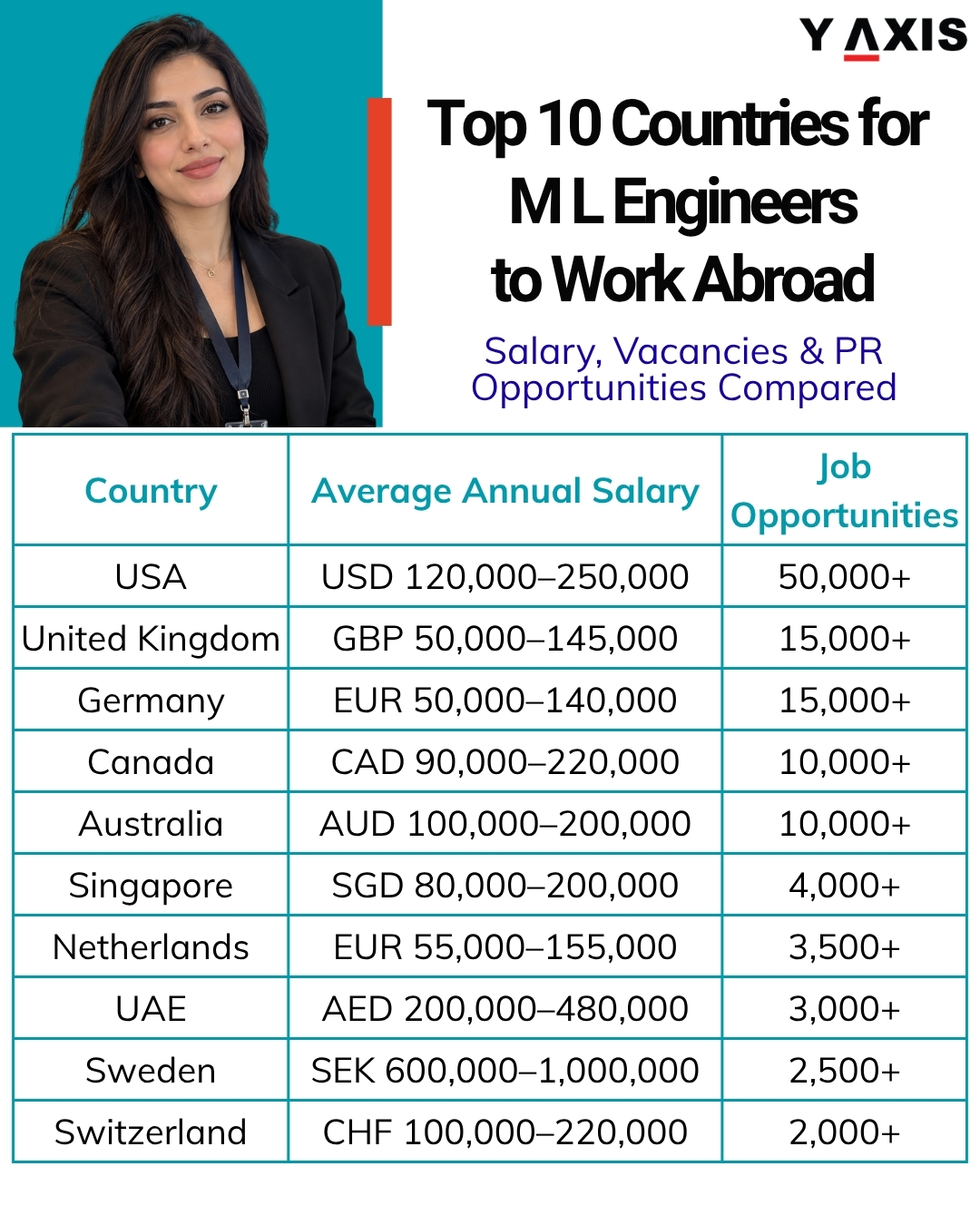
Top 10 Countries for Machine Learning (ML) Engineers to Work Abroad: Salary, Demand & PR Opportunities Compared