

Posted on October 09 2026
What is the Average Salary in Germany?

By , Editor & Director
Updated October 09 2026
The average salary in Germany is €4,851 gross per month for full-time employees, or €58,212 per year, excluding special payments, according to Destatis. Average annual gross earnings reach €64,441 when special payments are included. Salaries are higher in fields like medicine, engineering, IT, finance and law, while pay varies by role, experience, industry and location.
Germany is currently facing critical labour shortages across more than 10 key sectors, driving strong demand for skilled workers. Cities like Berlin, Munich, Frankfurt, Hamburg and Stuttgart are among the leading employment markets, with a wide range of roles, good earning potential and opportunities for long-term career growth and settlement in Germany.
*Want to work in Germany? Let Y-Axis help you through the application process.
Most In-Demand Jobs in Germany
The most in-demand jobs in Germany are concentrated in technology, healthcare, engineering, construction, skilled trades, transport and education. Germany has 157 shortage occupation categories, with high demand for roles like nurses, physicians, engineers, IT specialists and teachers. Due to the ageing workforce and large-scale retirements, there is strong demand for skilled professionals, creating more job opportunities across several sectors.
| Occupation | Average Annual Salary | Chances of Visa Sponsorship |
|---|---|---|
| IT & Software | €66,750 | High |
| Engineering | €75,000 | Very High |
| Healthcare | €53,000 | High |
| Nursing | €58,000 | Very High |
| Accounting & Finance | €59,250 | Moderate to High |
| Marketing & Sales | €57,250 | Moderate |
| Human Resources | €54,500 | Moderate |
| Logistics & Supply Chain | €49,750 | Moderate to High |
| Teaching | €60,250 | High |
| Construction & Skilled Trades | €54,000 | High |
Read More…
Most in-demand jobs in Germany for the next 10 years
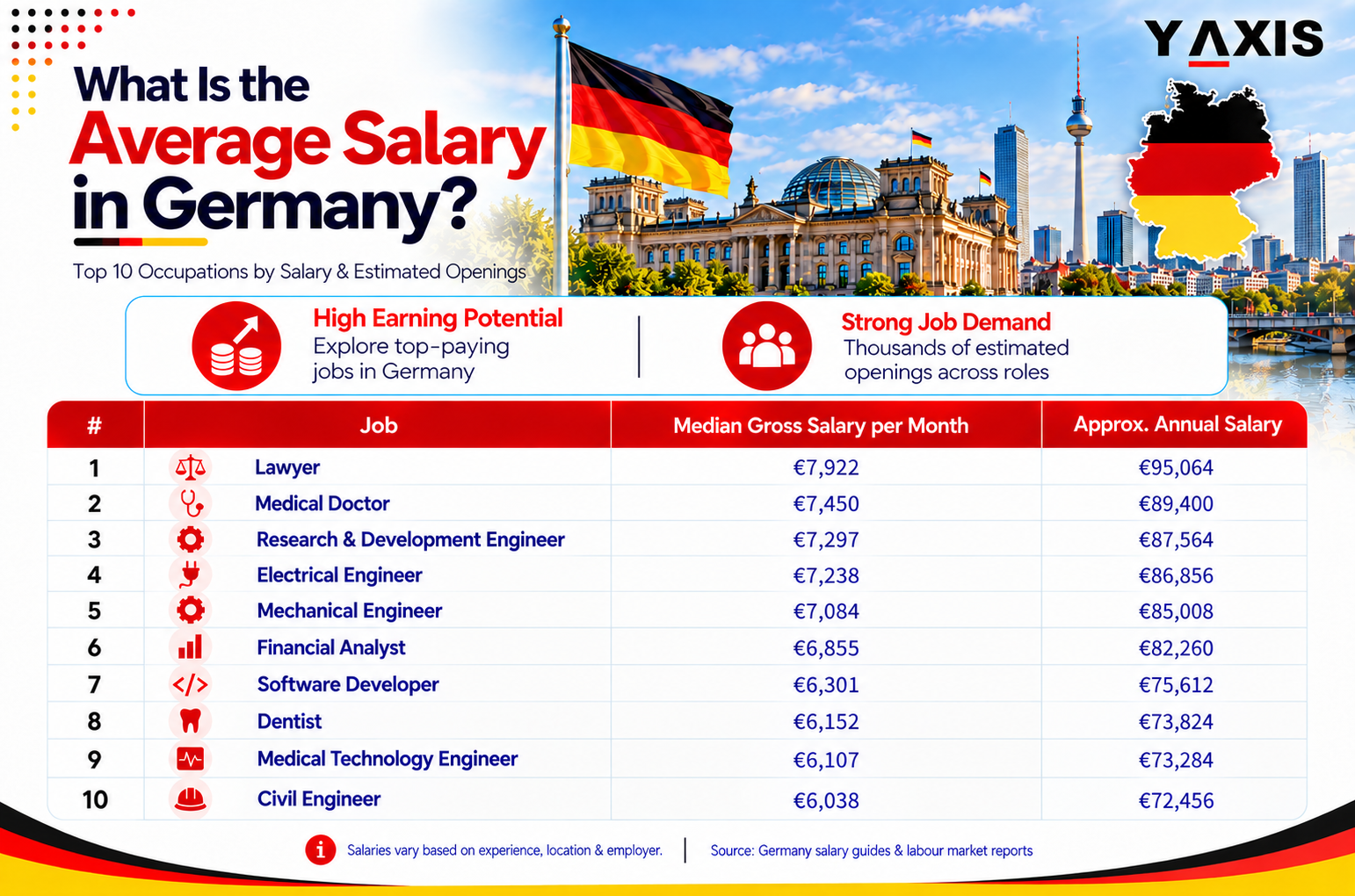
Top 10 Highest-Paying Jobs in Germany
Doctors, lawyers, engineers, software developers and financial specialists are among the highest-paid jobs in Germany. Fields like medicine, law, engineering, IT, finance and senior management have some of the highest-paying jobs, while salaries vary by job, qualifications and experience. According to the Federal Employment Agency (BA), the median gross salary for full-time employees is €4,217 per month, while employees with academic qualifications have a median salary of €6,146 per month.
| Job | Median Gross Salary per Month | Approx. Annual Salary |
|---|---|---|
| Lawyer | €7,922 | €95,064 |
| Medical Doctor | €7,450 | €89,400 |
| Research & Development Engineer | €7,297 | €87,564 |
| Electrical Engineer | €7,238 | €86,856 |
| Mechanical Engineer | €7,084 | €85,008 |
| Financial Analyst | €6,855 | €82,260 |
| Software Developer | €6,301 | €75,612 |
| Dentist | €6,152 | €73,824 |
| Medical Technology Engineer | €6,107 | €73,284 |
| Civil Engineer | €6,038 | €72,456 |
*Looking for jobs in Germany? Let Y-Axis guide you through application process.
Best Cities in Germany with Most Job Opportunities
Berlin, Munich, Frankfurt, Hamburg, Stuttgart and Cologne are among the best cities in Germany for jobs, with strong employment markets in technology, finance, engineering, healthcare, manufacturing, logistics and media. The median full-time salary in Germany is €4,506 gross per month (€54,066 annually, including special payments), while salaries vary by occupation and location.
| City | Key Industries | Top Companies |
|---|---|---|
| Berlin | Technology, IT, fintech, media, transport, healthcare | Deutsche Bahn, Siemens, Zalando, Deutsche Telekom, Charité |
| Munich | Automotive, engineering, IT, finance, insurance, technology | BMW, Siemens, Allianz, Munich Re, Infineon |
| Frankfurt | Banking, finance, insurance, fintech, IT | Deutsche Bank, DZ Bank, Commerzbank, Allianz, Deutsche Börse |
| Hamburg | Logistics, shipping, aviation, media, IT | Airbus, Lufthansa, Hapag-Lloyd, EDEKA, Otto Group |
| Stuttgart | Automotive, engineering, manufacturing, IT | Mercedes-Benz, Bosch, Porsche, Mahle, LBBW |
| Cologne | Media, telecommunications, insurance, healthcare, logistics | Deutsche Telekom, REWE Group, Lufthansa, AXA, RTL |
Also Read…
3 Million Jobs in Germany over the Next Decade
Germany vs UAE: Salary, Tax and Savings
The average gross salary in Germany is €4,851 per month, excluding special payments, while the average salary in the UAE is around AED 16,000 per month. Germany offers higher salaries in fields like IT, engineering, healthcare and finance, while the UAE provides a major tax advantage with 0% personal income tax on employment income. The comparison below shows gross salary, take-home pay, living costs and potential savings in Germany and the UAE.
| Factor | Germany | UAE |
|---|---|---|
| Gross Monthly Salary | €4,800 | AED 16,000 |
| Gross Annual Salary | €57,600 | AED 192,000 |
| Estimated Monthly Tax & Contributions | €1,750 (36%) | AED 0 (0%) |
| Estimated Monthly Take-Home Pay | €3,050 (64%) | AED 16,000 (100%) |
| Estimated Monthly Living Costs | €1,800 | AED 12,000 |
| Estimated Monthly Savings | €1,250 | AED 4,000 |
| Estimated Annual Savings | €15,000 | AED 48,000 |
Note: Figures are estimates and may vary by income, location, and individual circumstances.
Cost of Living in Germany
The cost of living in Germany for a single person is typically around €1,300–€2,400 per month, including rent, utilities, groceries and transport. Living costs are manageable for skilled workers with a stable salary, although Munich, Frankfurt, Berlin and Hamburg have higher housing costs, while cities like Leipzig, Dresden and Essen offer more affordable living options.
| Expense | Estimated Monthly Cost |
|---|---|
| 1-Bedroom Apartment | €800–€1,500 |
| Utilities & Internet | €200–€350 |
| Groceries | €250–€400 |
| Public Transport | €58–€100 |
| Mobile Phone | €15–€30 |
| Total Basic Living Costs | €1,323–€2,380 |
Job Outlook in Germany
The job outlook in Germany is strong for skilled workers in technology, healthcare, engineering, construction, skilled trades, transport and education. Germany currently has 157 shortage occupation categories and around 402,000 registered vacancies for skilled workers. An ageing workforce and large numbers of retirements are increasing the need for qualified workers, and Germany could face a shortage of 7 million workers by 2035. Foreign workers already account for around 14% of employment in shortage occupations, helping employers fill workforce gaps. These trends are creating more job opportunities for qualified workers and strong potential for long-term careers in Germany.
*Want to migrate to Germany? Get expert guidance from Y-Axis professionals.
FAQs
What is the average salary in Germany after tax?
The average gross salary in Germany is €4,851 per month, excluding special payments. The actual take-home salary depends on tax class and social-security deductions. For example, an employee earning €4,800 gross per month can receive around €3,050 net per month under a typical single-person tax and insurance setup.
What is the average annual salary in Germany?
The average gross monthly salary in Germany is €4,851 for full-time employees, giving an annualised salary of €58,212 over 12 months, excluding special payments. Average annual gross earnings increase to €64,441 when special payments are included.
What is considered a good salary in Germany?
A gross salary of €50,000–€60,000 per year provides a comfortable income for a single person in many German cities. A salary above €60,000 gives more room for savings, while housing costs in Munich, Frankfurt, Berlin and Hamburg require a higher budget.
Is €50,000 a good salary in Germany?
Yes, €50,000 gross per year is a good salary for a single person in Germany. It equals about €4,167 gross per month and can provide around €2,695 net per month for a single employee in Tax Class I without church tax. Housing costs will determine how much remains for savings.
How much money can I save in Germany?
A single person earning €4,800 gross per month can take home around €3,050 and save about €1,250 per month if living costs are around €1,800. This gives potential annual savings of approximately €15,000 after basic living expenses.
Which jobs have the highest salaries in Germany?
Lawyers, medical doctors, R&D engineers, electrical engineers, mechanical engineers, financial analysts, software developers and dentists are among the highest-paid occupations in Germany. Median monthly salaries for these roles range from about €6,000 to €7,900, based on occupation-level salary data.
Which jobs are most in demand in Germany?
Nurses, healthcare workers, engineers, construction workers, skilled tradespeople, professional drivers, cooks and teachers are among the jobs facing high demand. Germany currently has 157 shortage occupation categories, with around 402,000 registered vacancies for skilled workers.
What are the best cities in Germany for jobs?
Berlin, Munich, Frankfurt, Hamburg, Stuttgart and Cologne are major employment centres. Munich and Stuttgart have strong automotive and engineering markets, Frankfurt is a major finance centre, Berlin has a large technology and startup market, and Hamburg has major logistics, shipping and aviation employers.
How much does it cost to live in Germany per month?
A single person typically needs €1,300–€2,400 per month for rent, utilities, groceries and transport. A one-bedroom apartment can cost around €800–€1,500, utilities and internet €200–€350, groceries €250–€400 and public transport €58–€100 per month.
Is Germany or the UAE better for salary and savings?
Germany offers an average gross salary of €4,851 per month, while the UAE has no personal income tax on employment income. Germany deducts income tax and social security contributions, while UAE employees generally retain their full salary before personal expenses. Housing and daily living costs then determine potential savings in each country.
Tags:
Germany Salary
Average Salary in Germany
Germany Jobs
High-Paying Jobs in Germany
In-Demand Jobs in Germany
Best Cities for Jobs in Germany
Cost of Living in Germany
Germany vs UAE Salary
Germany Job Outlook
Share
Y-Axis Services

Get it on your mobile
Get News alerts
Contact Y-Axis
Latest Article
Popular Post
Trending Article
Posted On October 09 2026
What is the Average Salary in Germany?