


Posted on March 31 2026
Which is the best option to move abroad: Study or Work?

By , Editor
Updated April 28 2026
The best option to move abroad is studying if you are a fresher, and working if you already have experience. Studying abroad helps you gain a recognized qualification, build skills, and improve your chances of getting a job, especially in countries like Canada, Australia, and the UK that offer post-study work options.
Working abroad is the better choice for professionals with in-demand skills, as countries like Germany, the Netherlands, and Ireland offer direct job opportunities and faster career growth. Choosing the right path based on your experience and career goals will help you move abroad smoothly and build a stable future.
*Planning to move abroad for work or study? Get expert guidance from Y-Axis professionals.
Study abroad vs Work Abroad: Key Differences to Consider
The main difference between studying abroad and working abroad depends on your qualifications and experience. When you study abroad, you move to complete your education and then look for job opportunities after graduation, which gives you time to build skills, gain exposure, and understand the job market in that country.
Working abroad is suitable if you already have relevant experience and can secure a job offer, allowing you to start earning immediately and continue your career. Studying is a better option if you need qualifications or want to build a strong foundation, while working is more suitable if you are already job-ready and want faster career growth.
|
Factor |
Study Abroad |
Work Abroad |
|
Eligibility |
Academic qualifications, English test scores, and university admission |
Relevant work experience and a confirmed job offer |
|
Cost |
Tuition fees and living expenses |
Visa and relocation costs |
|
Job Opportunities |
Internships, campus placements, and post-study work options |
Direct entry into jobs based on skills and experience |
|
Earnings |
Part-time during studies, full-time after graduation |
Full-time salary from day one |
|
Career Growth |
Strong foundation with long-term career opportunities |
Faster career progress with international work experience |
|
Settlement |
Post-study work visas in Canada, Australia, and the UK lead to PR |
Skilled worker visas in Germany, Netherlands, and Ireland offer a direct PR path |
|
Ideal For |
Freshers and students looking to build skills |
Experienced professionals ready to work abroad |
Why Studying Abroad is the Best Option for Freshers and Graduates?
Studying abroad is a strong option for freshers and graduates as it helps them gain qualifications, build skills, and enter the job market more easily. It also gives time to understand how hiring works and prepare for full-time roles.
- Recognized Degree: Earn a globally recognized degree that improves job opportunities
- Internships: Access internship and campus opportunities for practical experience
- Part-Time Work: Work up to 20 hours per week during studies
- Post-Study Work: Stay back after graduation with 2–3 years of work options
- Job Access: Apply for full-time jobs locally after completing your course
*Want to study abroad? Let Y-Axis help you through application process.
Why Working Abroad is the Best Option for Skilled Professionals?
Working abroad is a strong option for skilled professionals as it allows them to secure jobs directly based on their skills and start earning immediately. It also provides access to better job opportunities, international work experience, and clear pathways to long-term work and permanent residency in many countries.
- Higher Salaries: Earn 2x–5x more depending on the country and role
- In-Demand Sectors: IT, healthcare, engineering, finance, HR, and marketing
- Job Opportunities: Apply for roles in top countries like Germany, Canada, Australia, the Netherlands, and Ireland
- Faster Processing: Quick visa processing for skilled professionals
- PR Pathways: Move towards permanent residency through skilled visa programs
*Want to work abroad? Let Y-Axis guide you through application process.
How to Choose the Best Country to Move Abroad for Work and Study?
Choosing between studying and working abroad depends on your experience, budget, and long-term career goals. Both options offer strong opportunities, but the right choice depends on your current profile and what you want to achieve.
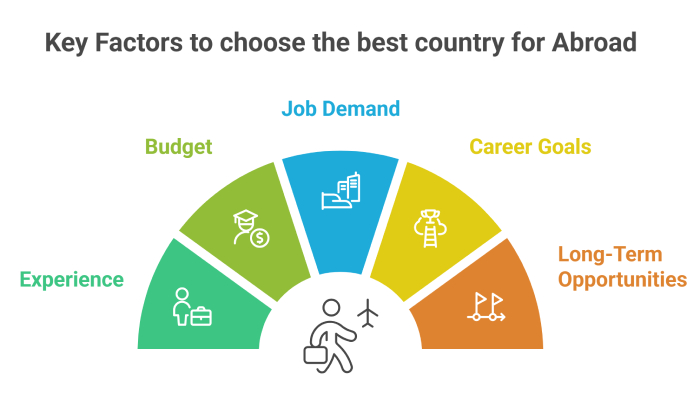
Key factors to consider best country for moving abroad for work and study:
- Experience: Freshers benefit from studying, while those with relevant work experience can move directly into work
- Budget: Studying needs upfront investment, while working lets you start earning immediately
- Job Demand: Choose countries where your field is hiring, especially in IT, healthcare, and engineering
- Career Goals: Study to build qualifications or switch fields; work for faster career growth
- Long-Term Plan: Study offers a step-by-step path, while work leads directly to job and long-term opportunities
Best Countries to Study or Work Abroad for Freshers and Professionals
The best countries to move abroad depend on whether you plan to study or work. For freshers, countries like Canada, Australia, the UK, and Germany are popular because they offer good education and post-study work options. For skilled professionals, countries such as Germany, the Netherlands, Ireland, and the UK offer strong job opportunities in high-demand sectors. Choosing the right country based on your profile and career goals will help you find better opportunities and settle more easily.
Top Countries for Studying Abroad for Freshers and Graduates
- Canada: One of the most popular choices for freshers, offering post-study work options of up to 3 years, which helps you gain local work experience and move into full-time jobs. Strong opportunities are available in IT, healthcare, engineering, and business sectors
- Australia: Known for quality education and flexible part-time work during studies. Freshers can stay and work for 2–3 years after graduation, with good job opportunities in healthcare, IT, construction, and hospitality
- United Kingdom: Offers shorter course durations (1–2 years) and a 2-year post-study work option. Freshers can find opportunities in finance, healthcare, business, and creative industries after graduation
- Germany: A cost-effective option with low or no tuition fees in public universities. Freshers can explore job opportunities in engineering, IT, and manufacturing sectors after completing their studies
- New Zealand: Offers quality education with post-study work options of up to 3 years. Freshers can find opportunities in healthcare, IT, and construction sectors after graduation
- Ireland: Known for strong universities and growing job opportunities in IT, finance, and pharmaceuticals. Offers post-study work options of up to 2 years
Top Countries for Working Abroad for Skilled Professionals
- Germany: One of the top destinations for skilled professionals, especially in engineering, IT, and manufacturing. Offers structured work visa options like the EU Blue Card and strong demand for qualified workers
- Netherlands: A growing job market with opportunities in IT, finance, logistics, and tech. Known for a good work environment and demand for international talent
- Ireland: Popular for roles in IT, pharmaceuticals, and finance. Many global companies are based here, offering good job opportunities for skilled workers
- United Kingdom: Offers a wide range of opportunities through the Skilled Worker visa, especially in healthcare, IT, engineering, and business sectors
- Singapore: A major global business hub with opportunities in finance, IT, and management roles, offering competitive salaries and career growth
- Denmark: Known for high demand in engineering, healthcare, and renewable energy sectors, along with strong work-life balance
Eligibility Requirements for Studying or Working Abroad
To move abroad for study or work, you need to meet certain basic requirements based on your chosen country and pathway. These requirements ensure that you are eligible for admission, job opportunities, and visa approval. While the exact criteria may vary, most countries follow similar standards for both study and work options.
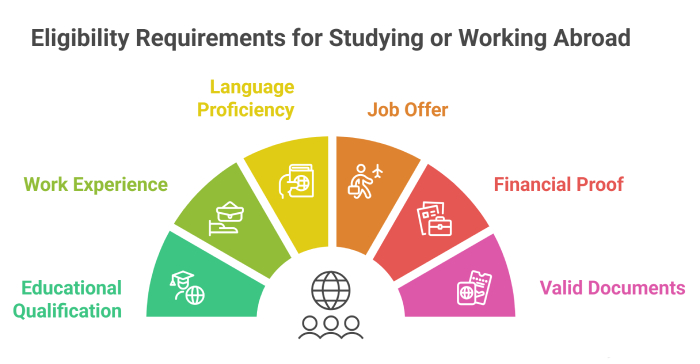
Key eligibility requirements for studying or working abroad:
- Educational Qualification: A relevant degree or academic background based on your course or job role
- Work Experience: Required for work visas, especially for skilled roles
- Language Proficiency: Proof of English language skills through tests like IELTS, PTE, or equivalent
- Job Offer: A confirmed job offer from an employer for work visa applications, or eligibility to apply through job-seeker visa pathways
- Financial Proof: Ability to show funds for tuition, living expenses, or initial settlement
- Valid Documents: Passport, academic records, and supporting documents as per visa requirements
Step-by-Step Process to Move Abroad for Study or Work
Moving abroad for study or work involves a clear process, from choosing the right country to completing your visa application. Following the correct steps helps you stay organized, avoid delays, and improve your chances of approval.
Steps to Move abroad for Studying:
Step 1: Choose a course and country based on your career goals
Step 2: Apply to universities with required documents and test scores
Step 3: Receive an admission or offer letter
Step 4: Arrange finances for tuition and living expenses
Step 5: Apply for a student visa with required documents
Step 6: Travel and start your studies
*Want to apply for study visa? Let Y-Axis help you through application process.
Steps to Move Abroad for Working:
Step 1: Identify countries and roles where your skills are in demand
Step 2: Apply for jobs through job portals or company websites
Step 3: Attend interviews and complete assessments
Step 4: Secure a job offer from an employer or explore job-seeker visa pathways
Step 5: Apply for a work visa with the required documents
Step 6: Travel and start your job
*Want to apply for work visa? Let Y-Axis help you through application process.
Tips to Successfully Move Abroad for Study or Work
- Choose study or work based on your qualifications and career stage
- Apply early to avoid delays in admissions, job offers, or visa processing
- Keep all required documents ready, including academic records and financial proof
- Focus on in-demand skills and job roles in your field
- Plan your finances for tuition, living expenses, or relocation costs
- Apply through official websites and trusted job portals
- Check visa requirements for your chosen country before applying
*Want to move abroad for work or study? Let Y-Axis help you through application process.
FAQs
Which is better, studying abroad or working abroad?
Studying abroad is better if you need a degree, want global exposure, and plan long-term career growth. It helps you enter the job market more easily, especially in countries like Canada and Australia that offer post-study work options. Working abroad is better if you already have experience and can secure a job directly in countries like Germany or the UK. Freshers usually benefit from studying first, while experienced professionals can move abroad for work.
Is it better to study abroad before working overseas?
Yes, studying abroad before working overseas is often the better choice, especially if you are starting your career. It helps you gain a local qualification, understand how hiring works, and build connections. Countries like the UK, Canada, and Australia offer post-study work options, making it easier to find a job after graduation. This approach increases your chances of getting hired compared to applying directly from outside the country.
What are the main benefits of studying abroad?
Studying abroad gives you a recognized degree, international exposure, and access to better job opportunities. Countries like Germany and France offer strong education systems, while others allow part-time work during studies. You also build important skills like communication and adaptability. Many students move into full-time roles after graduation, making studying abroad a strong option for long-term career growth and better professional opportunities.
What are the main benefits of working abroad?
Working abroad allows you to earn money immediately and gain real-world experience. Countries like Singapore, the UK, and Canada offer strong job markets in sectors such as IT, healthcare, and finance. You can grow your career faster, improve your salary, and gain international exposure. It is a practical option if you already have relevant skills and want to advance your career without spending time and money on further education.
Is studying abroad more expensive than working abroad?
Yes, studying abroad usually involves higher upfront costs such as tuition fees and living expenses. Countries like Australia and the UK can be expensive, although scholarships and part-time work can help reduce costs. Working abroad is more affordable in the short term because you start earning immediately. However, studying abroad can provide better long-term value by improving your qualifications and increasing your career opportunities.
Can I work after completing my studies abroad?
Yes, many countries allow international students to work after completing their studies. Canada offers post-graduation work permits, while the UK and Australia provide graduate visa options. These allow you to stay, gain local work experience, and find full-time jobs. Having a local degree also improves your chances of getting hired, making studying abroad a strong pathway to working and building a career overseas.
Is it easy to get a job abroad without studying there?
Getting a job abroad without studying there is possible if you have strong skills and experience. Countries like Germany, Ireland, and the Netherlands hire skilled professionals in fields like IT and engineering. However, for freshers, it can be more competitive without local education or experience. That’s why many people choose studying abroad first to improve their chances of finding a job and settling overseas.
What is the best option for freshers: study or work abroad?
For freshers, studying abroad is usually the better option because it helps build skills, gain qualifications, and improve job prospects. Countries like Ireland, Canada, and New Zealand offer student-friendly policies, including part-time work and post-study work options. This makes it easier to transition into full-time jobs after graduation. Studying abroad also helps freshers understand the job market and build connections before starting their careers.
What is the best option for experienced professionals?
For experienced professionals, working abroad is usually the better option. Countries like Germany, Switzerland, and the UK have strong demand for skilled workers in sectors like engineering, healthcare, and finance. With relevant experience, you can apply directly and start earning immediately. Studying abroad is only needed if you want to change careers or gain specialized qualifications to move into a different field.
Can I study and work abroad at the same time?
Yes, many countries allow international students to study and work at the same time. In countries like Canada, Australia, and the UK, students can work part-time during studies and full-time during holidays. This helps manage living expenses and gain practical work experience. Many students use part-time jobs to build skills and improve their chances of getting a full-time job after graduation.
Which option is faster to move abroad: study or work?
Working abroad is faster if you already have a job offer and meet visa requirements. Countries like Germany and the Netherlands process skilled worker visas efficiently for in-demand roles. However, getting that job offer can take time. Studying abroad takes longer at the start but provides a clear pathway to stay and work later. Many students choose this route to enter a country first and then move into employment after graduation.
Which option offers better long-term career growth?
Studying abroad often supports better long-term career growth because it combines education with local work experience. Countries like Canada and Australia offer pathways from study to employment, helping graduates build stable careers. Working abroad also offers strong growth if you already have experience in high-demand fields. The best option depends on your background—students benefit from structured pathways, while professionals can grow faster through direct employment opportunities.
Is studying abroad worth it for career growth?
Yes, studying abroad is worth it if you choose a course aligned with job demand. Countries like Finland and Sweden focus on practical learning, which helps students gain real-world skills. A recognized degree, along with internships or part-time work, improves your chances of getting hired. While it requires investment, studying abroad can lead to better career opportunities, higher salaries, and long-term professional growth.
What should I consider before choosing to work abroad?
Before choosing to work abroad, consider your skills, job demand, and visa requirements. Countries like Singapore, Germany, and Ireland hire skilled professionals in sectors such as IT, finance, and healthcare. It is important to check salary levels, cost of living, and growth opportunities. Understanding workplace expectations and having a confirmed job offer can make your transition smoother and help you settle quickly in a new country.
What should I consider before choosing to study abroad?
Before choosing to study abroad, look at course quality, tuition fees, and future job opportunities. Countries like Canada, Australia, and France offer strong education systems with work options after graduation. It is important to choose a course that matches job demand. You should also consider scholarships, living costs, and part-time work options. Planning these factors helps ensure your education leads to good career opportunities.
Which countries are best for both study and work abroad?
Countries like Canada, Australia, and the UK are popular because they offer strong education systems and work opportunities after graduation. Ireland and New Zealand are also good choices with growing job markets and student-friendly policies. In Europe, Germany and France provide affordable education and career options. These countries allow you to study, gain experience, and move into full-time jobs, making them ideal for long-term plans.
How do I decide between studying and working abroad?
To decide between studying and working abroad, consider your experience, budget, and career goals. If you are starting your career or want to switch fields, studying abroad is usually better. If you already have experience and meet job requirements, working abroad is more practical. Also look at visa options, job demand, and long-term plans in your chosen country to make the right decision.
Can studying abroad help me get permanent residency?
Yes, studying abroad can improve your chances of getting permanent residency in many countries. After completing your studies, you can gain local work experience and apply for long-term visas. Countries like Canada, Australia, and New Zealand offer clear pathways from study to permanent residency. Having a local degree and work experience makes your profile stronger and increases your chances of settling abroad.
Is it possible to switch from studying to working abroad later?
Yes, many people switch from studying abroad to working abroad after graduation. This is a common pathway where students complete their education and then apply for jobs. Countries like the UK, Ireland, and Australia allow graduates to stay and work for a certain period. This makes it easier to gain experience and transition into full-time employment in the same country.
What is the best overall option to move abroad?
The best option to move abroad depends on your situation. If you are a fresher or need qualifications, studying abroad is usually the better choice because it creates a clear path to jobs. If you already have experience, working abroad is faster and more cost-effective. Both options can lead to success, but choosing based on your skills and career goals will give you better results.
Tags:
study vs work abroad
study abroad
work abroad
moving abroad
overseas careers
international students
work visa
study visa
career abroad
study abroad benefits
working abroad benefits
global opportunities
Share
Y-Axis Services

Get it on your mobile
Get News alerts
Contact Y-Axis
Latest Article
Popular Post
Trending Article

Posted On April 14 2026
Fast-Track Hiring Options in Italy for Skilled Professionals