

Posted on December 29 2025
What are the most in-demand jobs in Germany for the next 10 years?

By , Editor
Updated January 24 2026
The most in-demand jobs in Germany over the next 10 years will be across information technology, engineering, healthcare, renewable energy, construction and skilled trades, logistics, and advanced manufacturing. High-demand roles include software developers, data and AI specialists, cybersecurity experts, engineers, doctors and nurses, renewable energy professionals, construction managers, supply chain specialists, and skilled technicians.
Germany currently has more than 1.8 million job vacancies, with workforce shortages expected to rise 7 million by 2035 due to an ageing population, low birth rates, and rapid digital transformation. With over €1 trillion being invested in infrastructure, clean energy, digitalisation, housing, and industrial modernisation, increasing demand for skilled workers and creating millions of new job opportunities across key sectors.
With competitive salaries, strong labour protections, and a healthy work–life balance, Germany continues to offer long-term career opportunities for skilled professionals planning to work in Europe.
*Want to work in Germany? Let Y-Axis guide you through application process.
Most In-Demand Jobs in Germany for the Next 10 Years
The most in-demand job opportunities in Germany are driven by long-term skill shortages and economic expansion. Over the next 10 years, employers will actively hire professionals across IT, engineering, healthcare, renewable energy, and construction. Ageing demographics and low workforce supply are increasing demand across technical and skilled roles. These sectors offer strong job stability, competitive salaries, and long-term career growth.
List of Most In-Demand Job Opportunities in Germany for next 10 years:
|
Sector |
In-demand Job Roles |
|
Information Technology (IT) |
Software Developers, Data Scientists, Cybersecurity Experts, Cloud Computing Specialists |
|
Engineering & Manufacturing |
Mechanical Engineers, Electrical Engineers, Civil Engineers, Automotive Engineers, Wind Turbine Engineers |
|
Healthcare & Nursing |
Registered Nurses, Doctors, Healthcare Technicians, Medical Researchers |
|
Marketing & Sales |
Digital Marketing Specialists, Sales Managers, Market Analysts, Brand Managers |
|
Human Resources (HR) |
Recruitment Specialists, HR Managers, Learning & Development Coordinators |
|
Education & Teaching |
Teachers, English Language Instructors, University Lecturers |
|
Finance & Accounting |
Accountants, Financial Analysts, Auditors, Payroll Specialists |
|
Hospitality & Tourism |
Hotel Managers, Chefs, Guest Service Supervisors, Event Coordinators |
|
Renewable Energy & Sustainability |
Solar Energy Technicians, Energy Consultants, Environmental Engineers |
|
Construction & Skilled Trades |
Construction Managers, Site Supervisors, Electricians, Plumbers, HVAC Technicians, Welders |
High-Paying Careers in Germany for Skilled Professionals
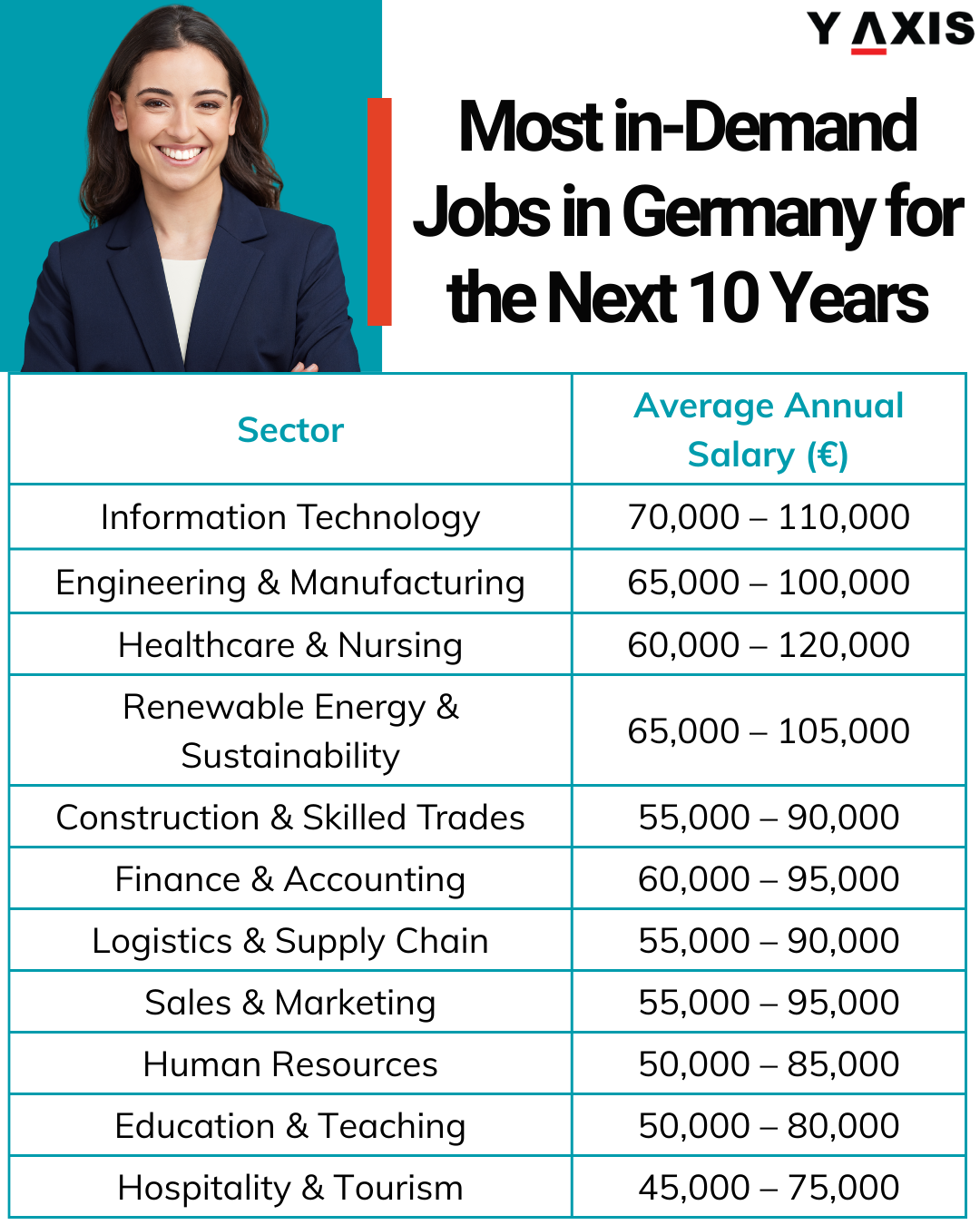
Germany offers several high-paying career paths that are expected to remain in strong demand due to persistent skill shortages and continued economic investment. Digital transformation, healthcare needs, infrastructure expansion, and the clean energy transition are driving competitive salary growth and long-term job security.
High-Paying Careers in Germany and Job Outlook for Skilled Professionals:
|
Sector |
Average Annual Salary (€) |
Job Outlook |
|
Information Technology |
70,000 – 110,000 |
Very High |
|
Engineering & Manufacturing |
65,000 – 100,000 |
High |
|
Healthcare & Nursing |
60,000 – 120,000 |
Very High |
|
Renewable Energy & Sustainability |
65,000 – 105,000 |
High |
|
Construction & Skilled Trades |
55,000 – 90,000 |
High |
|
Finance & Accounting |
60,000 – 95,000 |
Medium to High |
|
Logistics & Supply Chain |
55,000 – 90,000 |
High |
|
Sales & Marketing |
55,000 – 95,000 |
Medium to High |
|
Human Resources |
50,000 – 85,000 |
Medium |
|
Education & Teaching |
50,000 – 80,000 |
Medium |
|
Hospitality & Tourism |
45,000 – 75,000 |
Medium |
Top Skills in Demand in Germany for the Next 10 Years
Germany’s labour market is evolving rapidly due to automation, demographic change, and sustainability goals. Employers increasingly prioritise future-ready skills that support innovation, efficiency, and long-term competitiveness.
Key skills in demand for skilled professionals include:
- Digital & Technology: Software development, AI and machine learning, cloud computing, cybersecurity, data analytics
- Engineering & Industrial: Automation, robotics, CAD/CAE, electrical and industrial engineering
- Healthcare & Clinical: Nursing, elderly care, medical technology, healthcare administration
- Renewable Energy & Sustainability: Solar and wind systems, energy management, environmental engineering
- Construction & Skilled Trades: Electrical work, plumbing, welding, HVAC, site supervision
- Logistics & Supply Chain: Procurement, warehouse management, transport planning
- Finance & Business: Financial analysis, accounting, compliance, risk management
- Language & Soft Skills: German language proficiency, communication, adaptability, teamwork
How to Get a Job in Germany for Skilled Professionals?
Germany offers structured and transparent hiring pathways for skilled professionals across priority sectors. Targeting shortage occupations and following a clear application process significantly improves job prospects.
Step-by-Step Application Process for Skilled Professionals:
Step 1: Identify in-demand roles aligned with your skills
Step 2: Get academic and professional qualifications recognised
Step 3: Prepare a Germany-standard CV and tailored cover letter
Step 4: Apply through trusted job portals and employer career pages
Step 5: Attend interviews and secure a job offer
Step 6: Apply for the German work visa
*Want to apply for jobs in Germany? Get expert guidance from Y-Axis professionals.
Benefits of Working in Germany for Skilled Professionals
Germany offers a stable and employee-friendly work environment designed to support long-term career growth and personal wellbeing. Strong labour laws and social protections make it one of Europe’s most reliable employment markets.
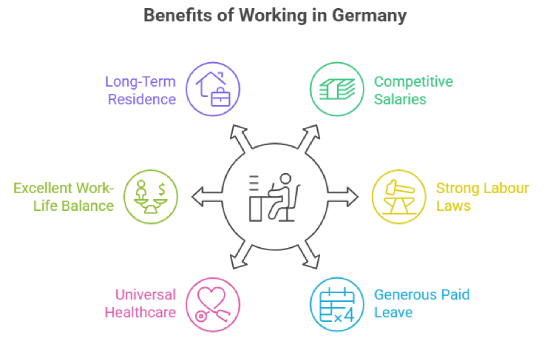
Key benefits for skilled professionals include:
- Competitive salaries and regulated working hours
- Strong labour laws and high job security
- Generous paid leave and public holidays
- Universal healthcare and social security benefits
- Excellent work–life balance
- Clear pathways to long-term residence and settlement
Top Cities in Germany with Job Opportunities for Skilled Professionals
Germany’s major cities act as powerful economic and innovation hubs, offering diverse job opportunities across high-growth and skill-shortage sectors. Strong infrastructure, global employers, and industry specialisation make these cities attractive for long-term career growth.
List of top 6 cities for skilled professionals to work in Germany:
- Berlin: A leading centre for IT, startups, digital transformation, creative industries, and technology innovation
- Munich: Known for engineering excellence, automotive manufacturing, IT, and advanced research and development
- Frankfurt: Europe’s financial hub with strong demand in banking, fintech, finance, and corporate services
- Hamburg: A major logistics and trade centre, with opportunities in aerospace, manufacturing, and supply chain management
- Stuttgart: A global leader in automotive engineering, advanced manufacturing, and industrial innovation
- Cologne: Strong demand across media, technology, healthcare, and professional services
Job Outlook in Germany for the Next 10 Years
Germany’s job outlook remains strong and positive over the next decade. An ageing population, low birth rates, and expanding investment in digitalisation, clean energy, housing, and infrastructure are expected to widen existing skill shortages. Demand across IT, engineering, healthcare, construction, logistics, and manufacturing will continue to outpace supply, increasing reliance on internationally trained professionals. Overall, Germany offers stable employment prospects, competitive earnings, and long-term career growth for skilled professionals planning to build a future in Europe.
FAQs
What are the most in-demand jobs in Germany for the next 10 years?
The most in-demand jobs in Germany for the next 10 years include software developers, data and AI specialists, cybersecurity experts, engineers, healthcare professionals, renewable energy experts, construction managers, logistics specialists, and skilled technicians. Demand is driven by an ageing population, low birth rates, digital transformation, and large-scale investment in infrastructure and clean energy, creating long-term job opportunities and career stability.
Which sectors will have the highest job demand in Germany over the next decade?
The highest job demand in Germany over the next decade will be in information technology, engineering and manufacturing, healthcare and nursing, renewable energy, construction and skilled trades, logistics and supply chain, and finance. These sectors are supported by government investment, industrial modernisation, and workforce shortages, ensuring strong hiring, competitive salaries, and long-term career growth for skilled professionals.
Why is Germany facing skill shortages across multiple industries?
Germany is facing skill shortages due to an ageing workforce, low birth rates, and high retirement rates among experienced professionals. At the same time, digitalisation, clean energy transition, and infrastructure expansion are creating new roles requiring specialised skills. Local talent supply is not growing fast enough, leading to long-term labour gaps across IT, healthcare, engineering, construction, and manufacturing sectors.
Are IT and tech jobs in high demand in Germany?
Yes, IT and tech jobs are among the most in-demand jobs in Germany for the next 10 years. Software developers, data scientists, AI engineers, cybersecurity specialists, and cloud professionals are needed across industries. Digital transformation in finance, healthcare, manufacturing, and logistics is driving continuous hiring, offering strong salaries, job security, and long-term career growth in the technology sector.
What healthcare jobs are most in demand in Germany?
The most in-demand healthcare jobs in Germany include registered nurses, doctors, medical specialists, healthcare technicians, and elderly care professionals. Demand is rising due to an ageing population and expanding healthcare services. These roles offer stable employment, competitive salaries, and long-term career security, making healthcare one of the most reliable and future-proof sectors in Germany.
Are renewable energy jobs growing in Germany?
Renewable energy jobs are growing rapidly in Germany due to strong investment in sustainability and clean energy. High-demand roles include solar and wind energy technicians, renewable energy engineers, environmental engineers, and sustainability consultants. Expansion of wind, solar, hydrogen, and energy-efficient infrastructure is creating long-term employment opportunities across the renewable energy sector.
What engineering jobs will be in demand in Germany in the future?
Engineering jobs in demand in Germany include mechanical, electrical, civil, automotive, robotics, and renewable energy engineers. Strong manufacturing, automotive innovation, infrastructure development, and automation are driving sustained demand. Engineers benefit from competitive salaries, career stability, and opportunities across multiple industries, making engineering one of the strongest career paths in Germany.
Are construction and skilled trade jobs in demand in Germany?
Yes, construction and skilled trade jobs are in high demand in Germany due to housing development, infrastructure expansion, and renewable energy projects. Roles such as construction managers, electricians, plumbers, HVAC technicians, welders, and site supervisors face major shortages. These jobs offer stable employment, good earning potential, and long-term demand across the construction sector.
What skills are most important to get a job in Germany?
The most important skills to get a job in Germany include technical expertise, digital skills, and practical experience. High-demand skills include software development, data analytics, AI, engineering, healthcare expertise, automation, and renewable energy systems. German language skills are a strong advantage, along with soft skills such as communication, adaptability, teamwork, and problem-solving.
Is Germany a good country for long-term career growth?
Yes, Germany is a strong choice for long-term career growth due to stable employment, competitive salaries, and strong labour protections. Skilled professionals benefit from work–life balance, social security benefits, and consistent demand across key sectors. With long-term workforce shortages and continued investment, Germany offers secure career prospects and professional development opportunities.
Tags:
Germany jobs
in-demand jobs in Germany
Germany job market
skilled professionals
future jobs
work in Germany
high-paying jobs
Share
Y-Axis Services
Get it on your mobile
Get News alerts
Contact Y-Axis
Latest Article
Popular Post
Trending Article
Posted On March 11 2026
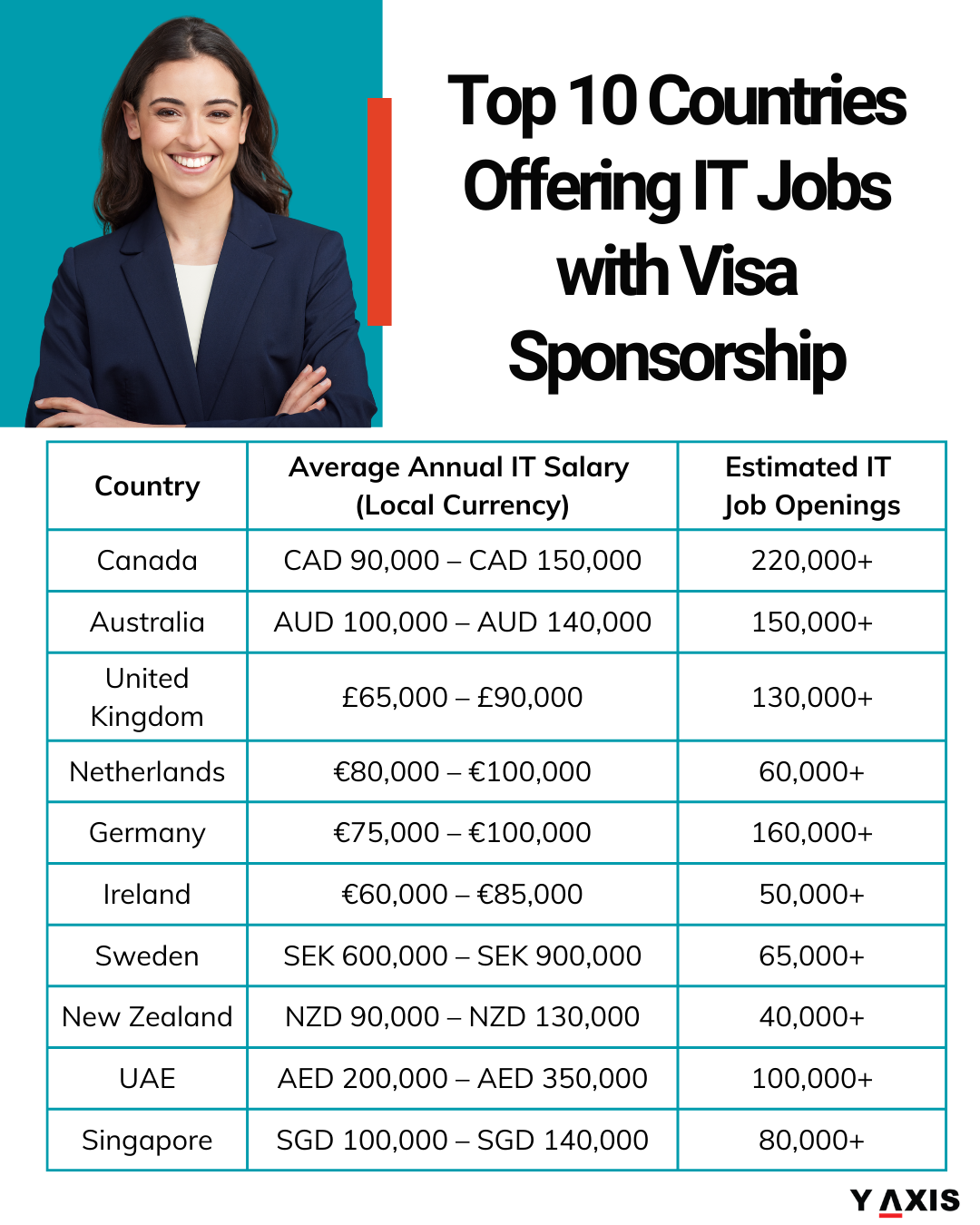
Top 10 Countries Offering IT Jobs with Visa Sponsorship